
What's Happening?
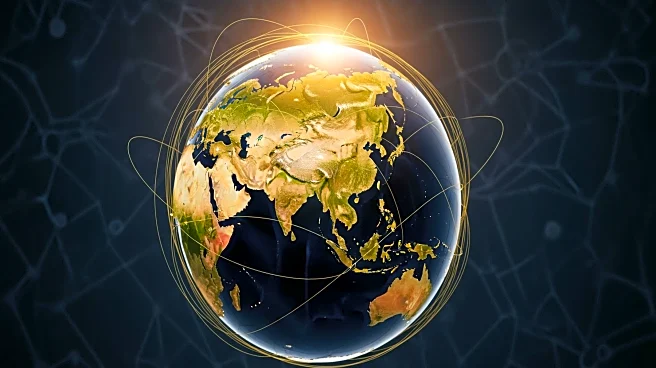
Recent diplomatic efforts in Asia and Europe have highlighted the influence of President Trump, even when not directly mentioned. In Beijing, the UK and China have called for a 'long-term, stable, and comprehensive
strategic partnership.' Similarly, Vietnam and the European Union have upgraded their ties to a comprehensive strategic partnership, placing Vietnam on the same diplomatic level as the United States, China, and Russia. In New Delhi, the EU and India have finalized a major free trade agreement, which had been stalled for years. These developments are partly driven by the uncertainty introduced by President Trump's policies, including import tariffs that have prompted countries to seek new markets.
Why It's Important?
The diplomatic moves underscore a shift in global alliances and economic strategies, as countries adapt to the unpredictability of U.S. foreign policy under President Trump. By seeking new partnerships, these nations aim to reduce their economic reliance on the U.S. and stabilize their positions in the global order. This realignment could have significant implications for international trade, economic growth, and geopolitical stability. The agreements reflect a broader trend of countries seeking to maintain a rules-based international order amidst perceived threats to global stability.
What's Next?
As these partnerships develop, they may lead to increased trade and economic cooperation between Asia and Europe, potentially reducing the influence of the U.S. in these regions. The agreements could also prompt other countries to pursue similar strategies, further altering the global economic landscape. Observers will be watching how the U.S. responds to these shifts and whether it will seek to reassert its influence through new diplomatic or economic initiatives.