





What's Happening?
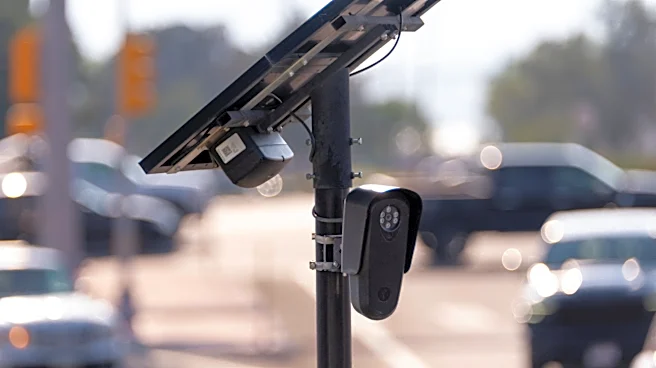
The Lucas County Sheriff’s Office (LCSO) has introduced new policies governing the use of license plate readers, specifically Flock cameras, in response to growing public skepticism across the country. Sheriff Mike Navarre approved the policy on August
19, which outlines specific rules for deputies and investigators utilizing the surveillance system. The county currently operates 33 Flock cameras, which capture and store digital images of license plates and vehicles, making this data searchable by law enforcement. A primary focus of the new policy is to address concerns about potential abuse by law enforcement, including provisions that mandate the purging of ALPR data after 30 days unless it is deemed evidence. Prohibited uses, such as invasion of privacy, harassment, intimidation, and personal use, have also been explicitly established.
Why It's Important?
The implementation of these new policies by the Lucas County Sheriff’s Office is a significant development in the ongoing national debate surrounding surveillance technology and civil liberties. The widespread deployment of Flock cameras and similar Automated License Plate Readers (ALPRs) has raised concerns among privacy advocates about potential government overreach and the collection of vast amounts of citizen data. This move by the LCSO reflects a proactive effort to balance public safety needs with individual privacy rights, potentially setting a precedent for other law enforcement agencies grappling with similar issues. The policy's emphasis on data retention limits and prohibited uses aims to build public trust and mitigate the risk of misuse, which is crucial for maintaining community relations and ensuring the ethical application of technology in policing. The public's reaction to these policies will be a key indicator of their effectiveness and acceptance.
What's Next?
The Lucas County Sheriff’s Office will now operate under these newly implemented policies for Flock camera usage. The effectiveness of these rules in addressing public skepticism and preventing misuse will likely be closely monitored by community groups and civil liberties organizations. There may be ongoing public discourse and potential adjustments to the policy based on feedback and practical application. The LCSO's newly created Transparency Portal, which details the number of cameras in use, suggests an ongoing commitment to openness. Other jurisdictions across the U.S. that are considering or currently using similar surveillance technologies may look to Lucas County's approach as a model for developing their own guidelines. The debate over the balance between security and privacy in the context of advanced surveillance tools is expected to continue nationally.
Beyond the Headlines
The Lucas County Sheriff’s Office's new policy on Flock cameras delves into the deeper societal tension between security and privacy in the digital age. While ALPR technology offers law enforcement a powerful tool for crime solving and prevention, its pervasive data collection capabilities raise fundamental questions about the nature of surveillance in a democratic society. The policy's attempt to limit data retention and prohibit certain uses reflects an acknowledgment of these concerns, but the inherent capacity of such systems to track movements and build profiles remains a point of contention. This situation highlights the evolving legal and ethical landscape surrounding data privacy, particularly as technology advances. It also underscores the importance of public engagement and oversight in shaping how these powerful tools are deployed, ensuring that their benefits do not come at the expense of fundamental rights and freedoms.