






What's Happening?
The University of the District of Columbia (UDC) is actively preparing students to tackle urban food challenges by focusing on resilient urban food systems and efficient food production. Andy Blunk, a project specialist at UDC’s Center for Urban Resilience,
Innovation and Infrastructure, leads research and educational initiatives that explore unconventional methods of growing food without soil, such as hydroponics. This includes testing dynamically managed LED lighting to reduce electricity consumption in indoor farms and investigating the use of local resources, like compost and treated biosolids from DC’s wastewater system, as nutrients for hydroponic agriculture. The program emphasizes the interdisciplinary nature of urban agriculture, integrating engineering, computer science, environmental science, and entrepreneurship to equip students with diverse skills. Blunk also leads a hydroponics camp for high school students, introducing them to food production in small spaces and connecting them with community-focused research.
Why It's Important?
This initiative is crucial for addressing food security and sustainability in urban environments across the U.S. By training students in advanced urban agriculture techniques, UDC is fostering a new generation of professionals capable of transforming underutilized urban spaces into productive food sources. The focus on resource efficiency, such as reducing energy consumption and recycling urban waste into nutrients, offers a model for sustainable food production that can lessen reliance on traditional, resource-intensive farming. This approach can lead to more localized food systems, reducing transportation costs and environmental impact, while also providing fresh produce to urban populations. Furthermore, the entrepreneurial aspect encourages students to develop viable businesses, potentially creating new economic opportunities and jobs within urban communities.
What's Next?
UDC plans to continue its research into making indoor agriculture more efficient and creating circular food systems. This includes further studies on dynamic LED lighting and the utilization of urban waste products as agricultural inputs. The university will also likely expand its educational offerings and community engagement programs, such as the hydroponics camp, to reach a broader audience and inspire more individuals to pursue urban agriculture. The interdisciplinary nature of the program suggests continued collaboration between various academic departments, fostering innovative solutions. Additionally, the insights gained from international collaborations, such as the recent trip to The Gambia, will inform future strategies for building resilient urban food systems in Washington, D.C., and beyond.
Beyond the Headlines
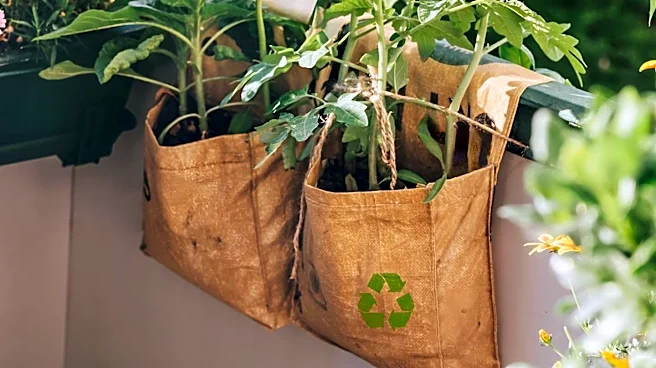
The work at UDC signifies a broader shift in how urban areas perceive and utilize their resources for food production. It challenges the traditional notion of farming requiring vast rural land, demonstrating that food can be grown in unexpected urban spaces like closets or unused rooms. This paradigm shift has significant implications for urban planning, potentially leading to policies that encourage and support urban farming initiatives. Ethically, it promotes food justice by making fresh, locally grown food more accessible to urban residents, particularly in food deserts. Environmentally, it highlights the potential for cities to become more self-sufficient and reduce their ecological footprint. Culturally, it reconnects urban populations with the process of food production, fostering a greater appreciation for natural systems and sustainable living.