


What's Happening?
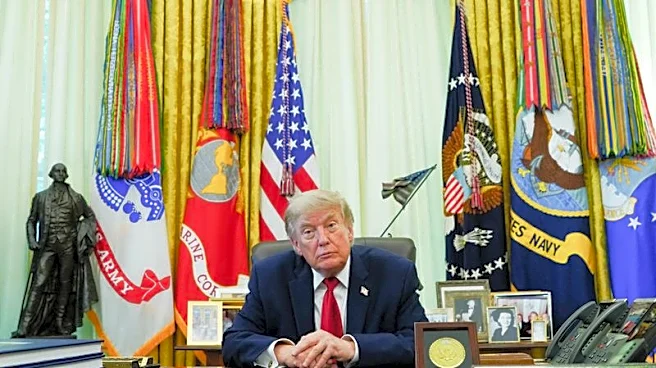
GOP lawmakers are expressing concern that President Trump is not aligned with voter priorities on economic issues, which are central to the 2026 midterm elections. Despite urging from Republican leaders to highlight his past economic achievements, Trump has
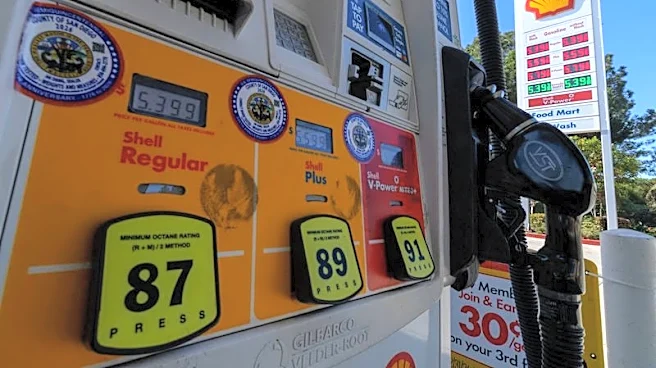
been more focused on other legislative priorities, such as the Safeguard American Voter Eligibility (SAVE America) Act, which has little chance of passing. Recently, Trump canceled a signing ceremony for a bipartisan housing affordability bill, demanding Congress pass the SAVE America Act first. This decision has frustrated GOP senators, who believe it could negatively impact their election prospects. Internal polling indicates that voters are increasingly dissatisfied with Trump's handling of the economy, especially following military actions against Iran that have led to higher gas and fertilizer prices.
Why It's Important?
The economic concerns highlighted by GOP lawmakers are significant as they could influence the outcome of the upcoming midterm elections. Voter dissatisfaction with economic management, particularly in light of rising inflation and living costs, poses a challenge for Republican candidates. The decision to prioritize the SAVE America Act over economic issues may alienate voters who are more concerned with immediate financial pressures. This misalignment between Trump's priorities and voter concerns could lead to a shift in voter support towards Democrats, as indicated by recent polling data. The economic narrative is crucial for the GOP to maintain control in Congress, and any perceived indifference to economic hardships could be detrimental.
What's Next?
As the midterm elections approach, GOP lawmakers may need to recalibrate their strategy to address voter concerns more directly. This could involve emphasizing economic policies that resonate with the electorate and distancing themselves from less popular legislative priorities. The Republican party might also need to engage in more effective communication strategies to convey empathy and solutions for economic issues. Additionally, the outcome of the elections could hinge on how well the party can align its messaging with voter priorities, particularly in battleground states where economic issues are most pressing.