What's Happening?
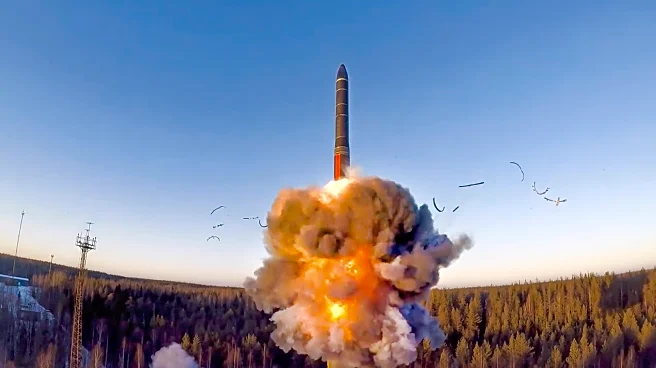
Russia has launched an Oreshnik hypersonic missile into Ukraine, targeting the city of Lviv, which is close to the Polish border. This marks the second use of the missile since the full-scale war began
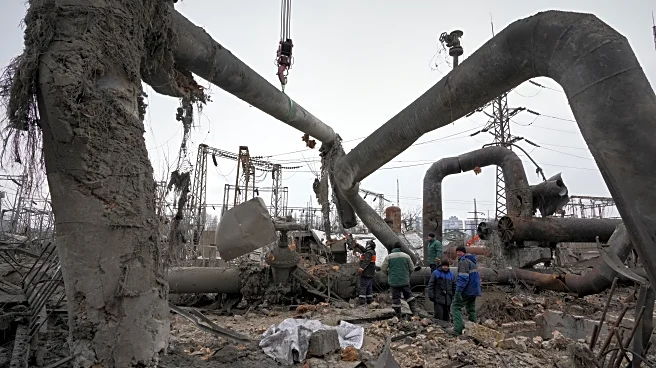
in 2022. The missile, capable of carrying nuclear or conventional payloads, was previously used in November 2024 to strike a factory in Dnipro. The recent strike is perceived as a warning to NATO and the West, highlighting Russia's emboldened stance. Ukrainian authorities reported several explosions in Lviv, and the strike has been condemned by Ukraine's Foreign Minister Andrii Sybiha and EU foreign policy chief Kaja Kallas as a significant threat to European security.
Why It's Important?
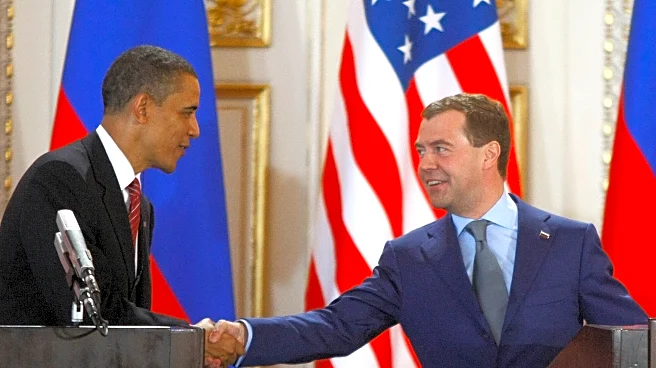
The missile strike near the Polish border, a NATO member, underscores the escalating tensions between Russia and the West. It serves as a stark reminder of the potential for conflict to spill over into NATO territories, challenging the alliance's security commitments. The use of a nuclear-capable missile also raises concerns about the potential for nuclear escalation, especially given the missile's ability to carry multiple warheads. This development could strain U.S.-Russia relations further and test the resolve of the transatlantic alliance in maintaining European security. The strike also highlights the ongoing geopolitical tensions and the complex dynamics of international diplomacy in the region.
What's Next?
The international community, particularly NATO, may need to reassess its defense strategies and diplomatic approaches in response to Russia's actions. There could be increased military readiness and strategic deployments in Eastern Europe to deter further aggression. Diplomatic efforts may intensify to address the security concerns raised by the missile strike, potentially involving renewed discussions on arms control agreements. The situation may also prompt further sanctions or political measures against Russia by Western nations, aiming to curb its military assertiveness.