




What's Happening?
Dawa Sherpa, a Nepali guide also known as Hillary Dawa Sherpa, was found alive on Mount Everest after being missing for a week. Initially presumed dead, his family had begun funeral rites. Sherpa was last seen in the 'death zone' of Everest, an area with
dangerously low oxygen levels. Despite a failed helicopter search, he was discovered by a climbing support team near the Khumbu icefall, just above base camp. Suffering from frostbite, he was otherwise in good health and was transported to a hospital in Kathmandu. His survival is considered miraculous by the mountaineering community.
Why It's Important?
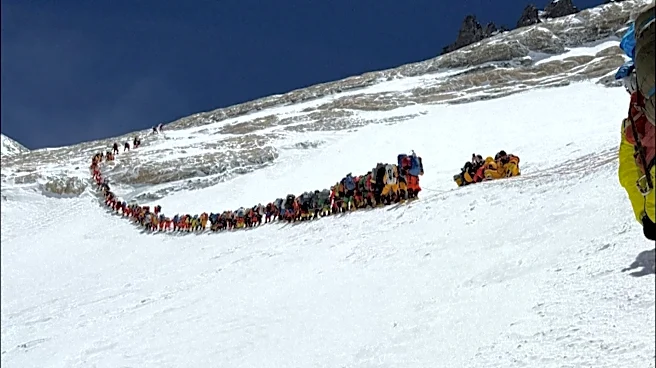
The survival of Dawa Sherpa highlights the extreme conditions faced by climbers on Everest and the resilience required to endure them. This incident underscores the risks associated with high-altitude mountaineering, particularly in the overcrowded 'death zone'. The event also draws attention to the critical role of Sherpas in guiding climbers and the dangers they face. The miraculous survival story may influence future safety protocols and rescue operations on Everest, emphasizing the need for better communication and support systems for guides and climbers alike.
What's Next?
Following this incident, there may be increased scrutiny on the safety measures and regulations governing Everest expeditions. The mountaineering community might advocate for stricter controls on the number of climbers allowed during peak seasons to prevent overcrowding in dangerous areas. Additionally, there could be calls for improved rescue operations and equipment to ensure the safety of guides and climbers. The story of Dawa Sherpa's survival may also inspire further research into survival strategies in extreme conditions.
Beyond the Headlines
Dawa Sherpa's story sheds light on the cultural and economic significance of mountaineering for the Sherpa community. Traditionally yak herders and traders, Sherpas have become integral to the climbing industry, often risking their lives for the success of expeditions. This incident may prompt discussions on the ethical responsibilities of expedition organizers towards their guides. It also highlights the need for better recognition and compensation for Sherpas, who play a crucial role in the success of Everest climbs.