



What's Happening?
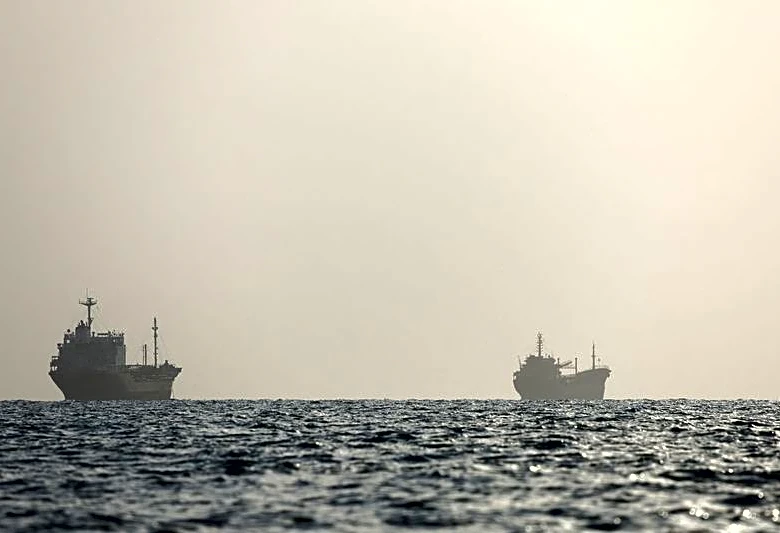
Taiwan faces a significant threat of economic warfare from China, which could involve various tactics from trade embargoes to blockades, potentially crippling the island's economy without a direct invasion. Experts Joseph Hanacek and Josh Richards emphasize
that Taiwan's current defense strategy, largely focused on amphibious assault from the west, neglects the equally likely threat of maritime asphyxiation. They argue that Taiwan's endurance depends on building resilience at home and reorienting its future growth eastward. This includes overhauling national energy production to reduce reliance on imported Liquefied Natural Gas (LNG), aiming for at least 75% energy independence for residential, commercial, and limited industrial use. Additionally, Taiwan needs to strengthen its merchant marine and construct deep-water, dual-use ports on its eastern coast, integrated with military infrastructure and seabed defense capabilities, to create a second strategic coastline for imports.
Why It's Important?
The global economy is heavily reliant on Taiwan's autonomy, particularly its dominant role in advanced semiconductor manufacturing. A successful economic coercion campaign or blockade by China could fracture global supply chains, reorient energy routes, and permanently alter the balance of power in Asia, with an estimated cost of over $1 trillion to the global economy within a year. Taiwan's vulnerability to maritime interdiction, especially its reliance on LNG imports for electricity, makes it susceptible to economic pressure. Strengthening eastern ports and energy independence would force China to commit more resources to any blockade attempt, increasing the military difficulties and potentially deterring such actions. This strategic shift is crucial not only for Taiwan's survival but also for maintaining global technological stability, the military balance in the Indo-Pacific, and the credibility of U.S.-led alliances.
What's Next?
To counter the threat, Taiwan should immediately increase its renewable and battery storage capacity by at least 11GW by 2030, ensure excess energy-generating capacity from coal plants is maintained, and pair any LNG electricity production increases with equivalent renewable energy investments. Taiwan also needs to work with shipping companies to develop plans for rapidly re-crewing critical merchant ships with Taiwanese personnel. The construction of deep-water, dual-use ports on the eastern coast, such as Hualien, Taitung, or Su'ao, with hardened infrastructure and tunnel-linked networks, is paramount. These ports should be integrated with military infrastructure, including anti-ship missile batteries and underground command centers, and equipped with maritime domain awareness and seabed defense capabilities. The U.S., Japan, and other allies are urged to fund a Taiwan East Coast Resilience Initiative, conduct joint logistics exercises, integrate Taiwan into undersea surveillance networks, and pre-position supplies in the region.
Beyond the Headlines
The recommendations highlight a critical shift in strategic thinking, moving beyond traditional military deterrence to encompass comprehensive resilience against economic warfare. This involves not just military investments but also significant civil infrastructure and policy changes. The emphasis on energy independence, a robust merchant marine, and eastern port development underscores the interconnectedness of economic security and national defense. Furthermore, the call for international collaboration in funding and implementing these measures reflects the understanding that Taiwan's security is a global concern. The long-term implications include a potential re-shaping of regional logistics and defense postures, forcing China to contend with a more resilient Taiwan and a more unified international response. This proactive approach aims to prevent China from achieving its objectives through economic asphyxiation, thereby preserving Taiwan's autonomy and safeguarding global economic stability.