


What's Happening?
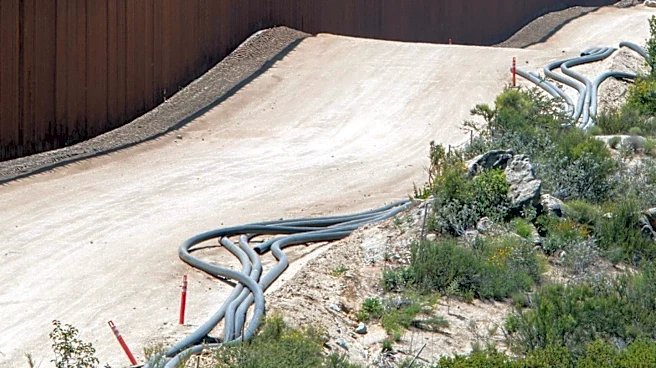
The Trump administration has commenced construction of the border wall through a section of the Big Bend region in west Texas. This marks the first significant construction in an area of the U.S.-Mexico border that has seen considerable opposition to
the administration's plans. This construction is a key component of the administration's broader $46 billion initiative to fortify the border with walls, barriers, roads, and advanced technology. The move comes as President Trump aims to fulfill a central campaign promise to complete the border wall. The start of this project is a notable development in the ongoing efforts to secure the U.S.-Mexico border, particularly in a region known for its challenging terrain and environmental sensitivities.
Why It's Important?
The construction of the border wall in west Texas is a significant step in the Trump administration's border security agenda, fulfilling a major campaign pledge. This project represents a substantial investment of $46 billion, indicating a long-term commitment to physical barriers as a primary method of border control. The chosen location in the Big Bend region, an area previously characterized by strong opposition, highlights the administration's determination to proceed despite local and environmental concerns. The wall's construction could have profound impacts on the local ecosystem, including wildlife migration patterns and natural landscapes. Economically, the project creates jobs in construction and related industries, but it also diverts significant federal funds that could be allocated to other border security measures or social programs. The ongoing debate surrounding the wall reflects deep divisions within U.S. politics regarding immigration policy, national security, and environmental protection.
What's Next?
Construction of the border wall in west Texas is expected to continue as part of the administration's broader plan. This will likely involve ongoing logistical challenges, potential legal battles from environmental groups and landowners, and continued political debate. The project's progress will be closely monitored by both supporters and opponents, with its completion potentially becoming a key talking point in future political campaigns. The long-term effectiveness of the wall in deterring illegal crossings and its impact on border communities and the environment will be subject to continuous evaluation. The administration will likely continue to emphasize the importance of the wall for national security, while critics will highlight its costs, environmental damage, and limited efficacy. The future of the wall project could also be influenced by changes in presidential administrations and shifts in congressional priorities.
Beyond the Headlines
The construction of the border wall in the Big Bend region carries deeper implications beyond its immediate purpose of border security. It symbolizes a broader ideological struggle over national identity, sovereignty, and the role of physical barriers in an interconnected world. The wall's presence in a naturally diverse and sensitive area like Big Bend raises ethical questions about human intervention in pristine environments and the balance between security and conservation. Culturally, the wall can be seen as a divisive symbol, representing either protection and order or exclusion and separation. Its construction also highlights the complex relationship between the U.S. and Mexico, impacting cross-border communities and potentially altering historical migration routes. The long-term legacy of the wall will likely be debated for generations, influencing perceptions of U.S. immigration policy and its impact on both sides of the border.