







What's Happening?
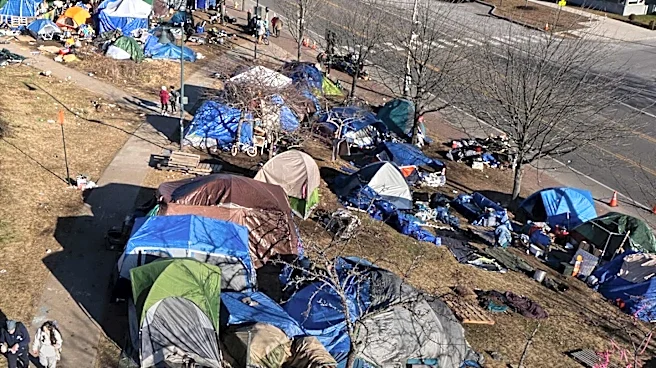
Homeless individuals in Eugene, Oregon, are facing significant difficulties retrieving their personal belongings after city and state-led encampment cleanups. Multiple agencies, including Eugene Parks, Eugene Police, and the Oregon Department of Transportation
(ODOT), are involved in property removal, leading to confusion due to differing storage facilities, holding times, and retrieval processes. Bobbie Stevens, a woman experiencing homelessness who lost a leg, has repeatedly lost her mobility scooters during these cleanups. Her red mobility scooter was removed from various local parks by Eugene Parks and Open Space, and despite attempts to retrieve it, her device remains missing. Stevens and her advocate, Thomas Zoll, highlighted that electric mobility devices were often left with others for charging or in parks with solar panels, further complicating retrieval. When individuals are arrested, their belongings are taken to evidence facilities by the Eugene Police Department or the Lane County Sheriff's Office, adding another layer of complexity to the retrieval process.
Why It's Important?
This issue highlights a critical humanitarian and logistical challenge for unhoused populations in Eugene and potentially other U.S. cities. The loss of essential personal belongings, especially medical equipment like mobility scooters, can severely impact the health, safety, and dignity of homeless individuals. The fragmented system of property storage and retrieval across multiple agencies creates an insurmountable barrier for many, who often lack consistent transportation, communication access, or the physical ability to navigate complex bureaucratic processes. This situation can exacerbate the cycle of homelessness by removing vital items needed for survival, employment, or maintaining personal hygiene. It also raises questions about the effectiveness and compassion of current cleanup policies, and whether they adequately balance public space management with the rights and needs of vulnerable populations.
What's Next?
The current system requires individuals to navigate different agencies, each with its own rules. For instance, Eugene Parks and Open Space stores personal property at the City Personal Property Storage Facility, holding items for 30 days (or 90 days if an arrest is involved). The Eugene Police Department stores items at a facility adjacent to the Parks and Open Space facility, or in lockers near the Lane County Jail, requiring appointments for retrieval. ODOT stores items for 30 days at maintenance facilities, which can be in various locations like Veneta, Oakridge, or Springfield, and requires individuals to contact "Ask ODOT" to identify the correct facility. These varied and often inaccessible processes mean that many belongings, like Bobbie Stevens' original scooter, are likely never retrieved. There is an implicit need for a more streamlined, centralized, and accessible system for property retrieval, along with better communication and resource provision for unhoused individuals during encampment cleanups.
Beyond the Headlines
The challenges faced by homeless individuals in retrieving their belongings after encampment cleanups point to a broader systemic issue of how society treats its most vulnerable members. The lack of a coordinated and compassionate approach can be seen as a form of dehumanization, where the possessions of unhoused people are treated as disposable, rather than essential to their survival and well-being. This situation also raises legal and ethical questions about property rights for those without permanent addresses. The difficulty in retrieving items can perpetuate a cycle of poverty and instability, making it harder for individuals to transition out of homelessness. Addressing this issue requires not just logistical improvements but also a fundamental shift in policy and public perception, recognizing the inherent dignity and rights of all individuals, regardless of their housing status.