
What's Happening?
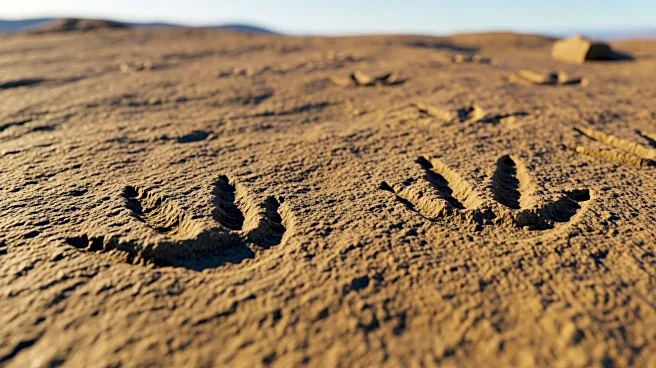
A team of paleontologists from Loma Linda University in California has documented 16,600 dinosaur footprints in Toro Toro National Park, Bolivia. This discovery, published in the journal PLOS One, represents
the highest number of theropod footprints recorded globally. The footprints, left by dinosaurs such as the Tyrannosaurus rex, provide a unique glimpse into dinosaur behavior, including attempts to swim. The tracks were preserved in lake-bottom sediment, protected from erosion over millions of years. Despite the abundance of footprints, the area lacks dinosaur bones, teeth, and eggs, suggesting that dinosaurs used the region as a migratory path rather than a settlement area.
Why It's Important?
This discovery is significant as it offers a rare window into the lives of dinosaurs during the Cretaceous period, just before their extinction. The footprints reveal behaviors that skeletal remains cannot, such as movement patterns and interactions with their environment. The site’s preservation is crucial for understanding dinosaur ecology and evolution. However, human activities, such as farming and quarrying, pose threats to these ancient tracks. Protecting this site is essential for ongoing research and for maintaining its historical and scientific value.
What's Next?
Future research is expected to continue at Toro Toro National Park, with paleontologists likely to uncover more footprints. This ongoing study will help scientists better understand dinosaur migration patterns and environmental interactions. Conservation efforts will be necessary to protect the site from human interference, ensuring that it remains a valuable resource for scientific discovery.
Beyond the Headlines
The findings at Toro Toro challenge previous assumptions about dinosaur habitats and migration. The lack of skeletal remains suggests that the area was a transit route rather than a permanent habitat. This could lead to new theories about dinosaur migration and survival strategies. Additionally, the site’s preservation highlights the importance of protecting paleontological sites from modern development.