


What's Happening?
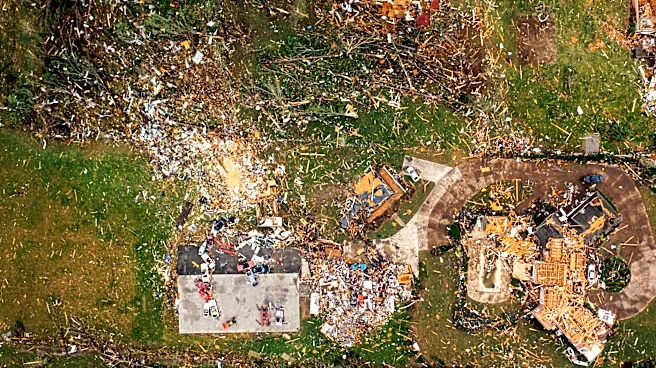
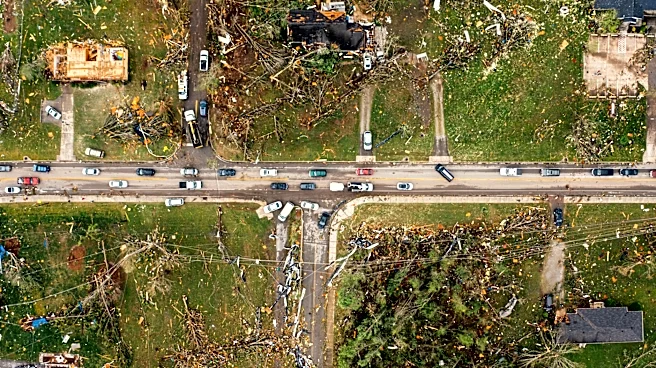
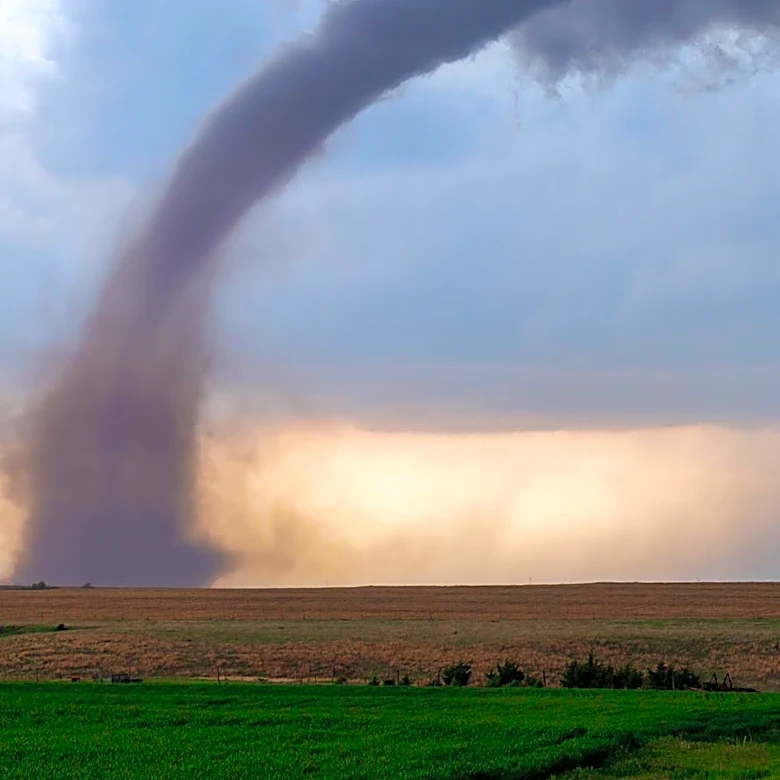
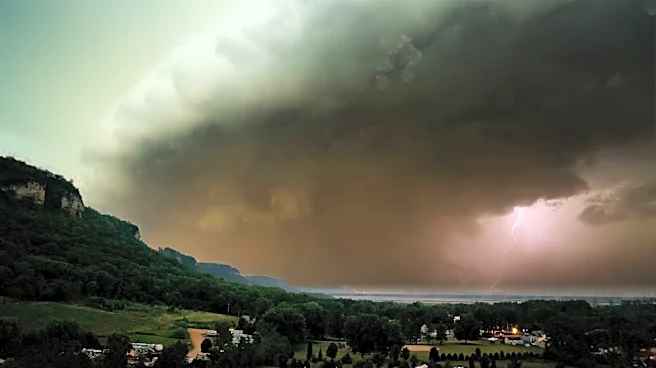
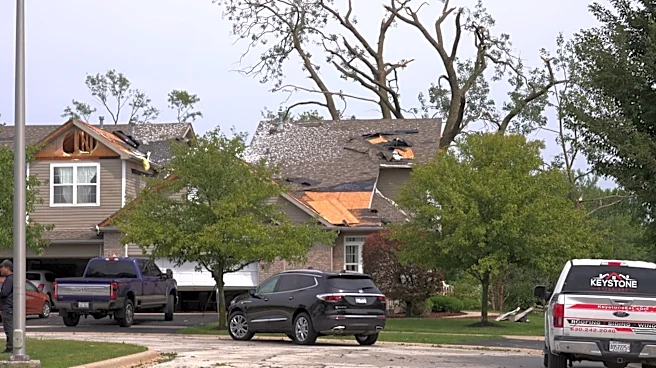
Severe storms have swept through the Midwest, causing significant damage and power outages across several states. The storms, which included tornadoes and heavy rains, have left hundreds of thousands without electricity. In Indiana, a four-year-old boy
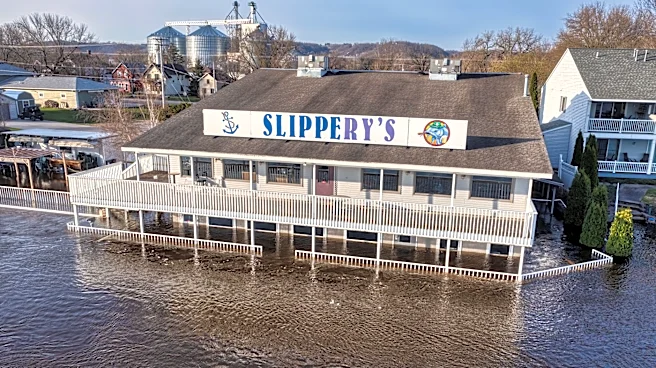
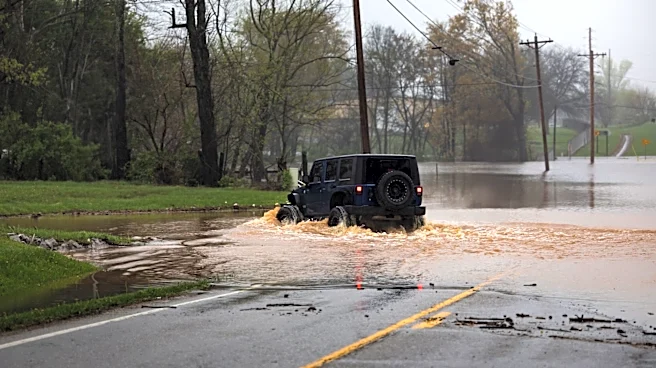
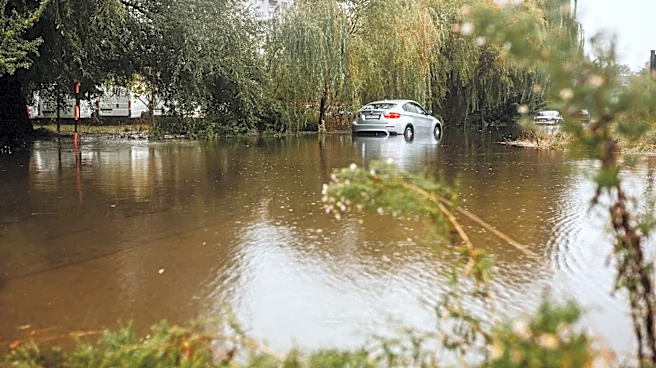
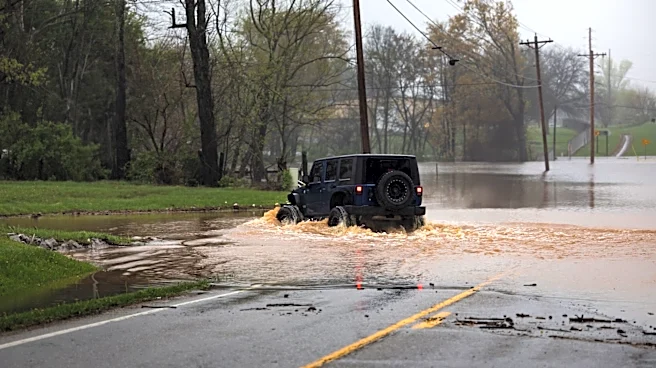
was tragically killed when a tree fell on his home. In Ohio, a resident died during a health emergency when first responders were unable to reach them due to flooded roads. The storms have also caused infrastructure damage, with reports of a house explosion in Portage, Indiana, potentially linked to the severe weather. Lightning strikes have injured 16 inmates at a prison complex in Ohio, with four still hospitalized. The National Weather Service has confirmed three tornadoes south of Chicago, and flood warnings are in effect from Illinois to Indiana, with flash flood watches extending to parts of Ohio, Kentucky, West Virginia, Virginia, and Tennessee.
Why It's Important?
The severe weather has had a profound impact on the Midwest, highlighting the vulnerability of infrastructure and emergency services to extreme weather events. The widespread power outages affect not only residential areas but also critical services, potentially delaying emergency responses and recovery efforts. The economic impact is significant, with businesses and communities facing disruptions. The storms underscore the need for improved infrastructure resilience and emergency preparedness in the face of increasingly frequent and severe weather events. The human toll, including fatalities and injuries, emphasizes the urgent need for effective disaster response strategies to protect lives and property.
What's Next?
Recovery efforts are underway, with utility crews working to restore power and clear debris. Ohio's Governor Mike DeWine has deployed the National Guard to assist in the hardest-hit areas. As the region braces for more potential storms, authorities are urging residents to stay informed and heed travel advisories. The ongoing weather threats may lead to further disruptions, and communities are preparing for additional emergency responses. Long-term, there may be discussions on enhancing infrastructure resilience and emergency management strategies to better handle such extreme weather events in the future.