

What's Happening?
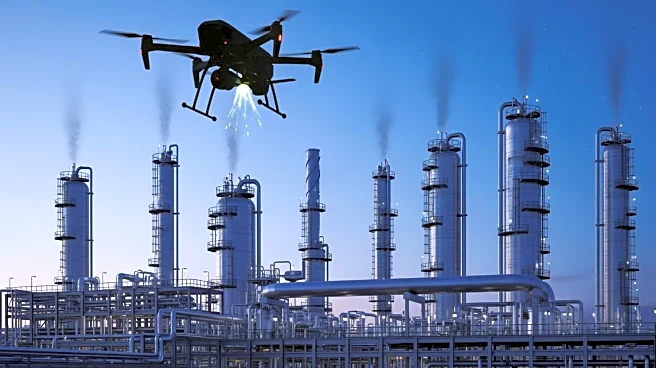
Ukraine's Unmanned Systems Forces executed a drone attack on the Syzran oil refinery located in Russia's Samara region. This refinery is a significant supplier of diesel fuel for Russia's domestic market and its occupation forces in Ukraine. The attack targeted
the refinery's primary oil processing unit, which is crucial for the Volga region's fuel supply. The strike is part of Ukraine's strategy to target Russian energy and logistics sites, aiming to counteract Russia's frequent missile and drone attacks on Ukrainian infrastructure. The refinery, part of the Samara refinery group of Rosneft, produces approximately 2.5 million tons of diesel annually. The attack also affected a city power substation, leading to temporary power and heating outages in residential areas.
Why It's Important?
The drone strike on the Syzran refinery represents a significant escalation in Ukraine's efforts to disrupt Russian energy supplies, which are vital for sustaining its military operations. By targeting key infrastructure, Ukraine aims to weaken Russia's logistical capabilities and reduce its ability to maintain occupation forces in Ukraine. The disruption of diesel supply could have broader implications for Russia's domestic market, potentially affecting transportation and industry. This action underscores the ongoing strategic battle between Ukraine and Russia, where infrastructure becomes a critical target in the conflict.
What's Next?
The attack may prompt Russia to enhance its defensive measures around key infrastructure sites, potentially increasing military presence in the Samara region. Ukraine might continue its strategy of targeting Russian energy facilities to further strain Russia's war efforts. The international community could see increased diplomatic activity as countries react to the escalation in hostilities. Russia's response, both militarily and diplomatically, will be closely watched as it seeks to mitigate the impact of these strikes.
Beyond the Headlines
The strike highlights the evolving nature of warfare, where drones and unmanned systems play a pivotal role in modern conflicts. This development raises questions about the ethical implications of using such technology in warfare, particularly concerning civilian infrastructure. The attack could lead to discussions on international regulations governing the use of drones in military operations, as well as the protection of civilian facilities during conflicts.