






What's Happening?
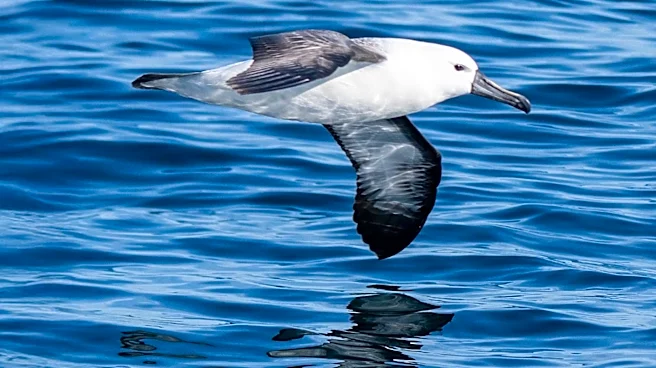
A 15-year study on sable shearwaters, conducted by Dr. Jennifer Lavers from Charles Sturt University, reveals that plastic pollution in oceans is causing a long-term decline in seabird populations. The research, which used a 20,000-strong colony on Lord
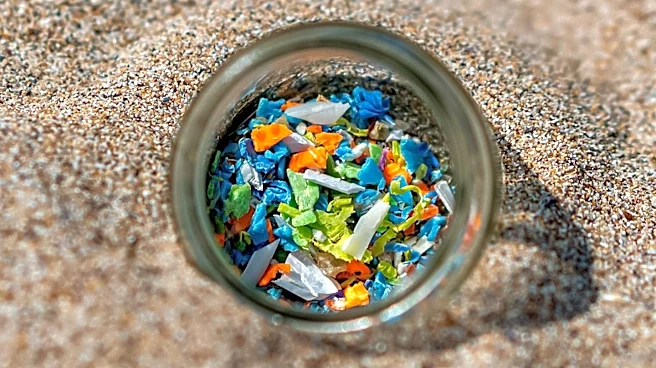
Howe Island as a case study, found that juvenile shearwaters are exhibiting dementia-like symptoms and suffering from a fibrotic disease called plasticosis due to plastic ingestion. Dr. Lavers noted that the average number of plastic pieces found in the birds' stomachs has dramatically increased from five to up to 60. This plastic consumption impairs the birds' complex song repertoire, which is vital for adults to locate their nesting burrows and chicks, consequently reducing breeding success.
Why It's Important?
This research has critical implications for understanding the broader ecological impact of plastic pollution, including potential effects on U.S. coastal ecosystems and marine life. Seabirds are often indicators of ocean health, and their decline signals widespread environmental degradation. The neurological and physical damage observed in shearwaters suggests that plastic pollution is not just a physical hazard but also a toxicological one, affecting fundamental biological processes. For the U.S., which has extensive coastlines and diverse seabird populations, these findings underscore the urgency of addressing plastic waste. It could prompt increased funding for marine conservation, stricter regulations on plastic production and disposal, and greater public awareness campaigns. The economic impact could include costs associated with ecosystem restoration and potential declines in industries reliant on healthy marine environments, such as fishing and tourism.
What's Next?
The research findings are expected to intensify calls for a more robust global plastics treaty. Dr. Lavers explicitly stated the need for an 'enforceable, bold, and immediate' global plastics treaty, especially given that a recent draft proposal was 'substantially watered down.' This will likely put pressure on international negotiators, including U.S. representatives, to push for stronger measures in upcoming discussions. Domestically, the findings could spur further scientific research into the specific mechanisms of plastic-induced neurological damage and plasticosis across various marine species. It may also lead to increased advocacy from environmental groups for policy changes, such as bans on single-use plastics and improved waste management infrastructure, to mitigate the impact on seabirds and other wildlife.
Beyond the Headlines
The study's revelation that three-month-old wild animals can exhibit dementia-like symptoms due to plastic ingestion highlights a profound and disturbing consequence of human activity on the natural world. This goes beyond simple physical entanglement or starvation, indicating a deeper, systemic disruption of biological functions. The term 'walking dead' used by scientists to describe these affected birds evokes a stark image of a future where ecosystems are fundamentally altered. This raises ethical questions about humanity's stewardship of the planet and the long-term, unforeseen impacts of industrial materials. The impairment of the birds' song repertoire, crucial for their survival and reproduction, symbolizes a broader loss of natural processes and biodiversity, suggesting that the true cost of plastic pollution extends to the very fabric of ecological life.