



What's Happening?
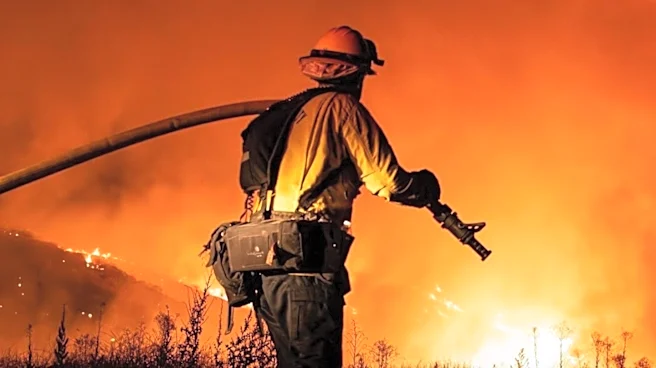
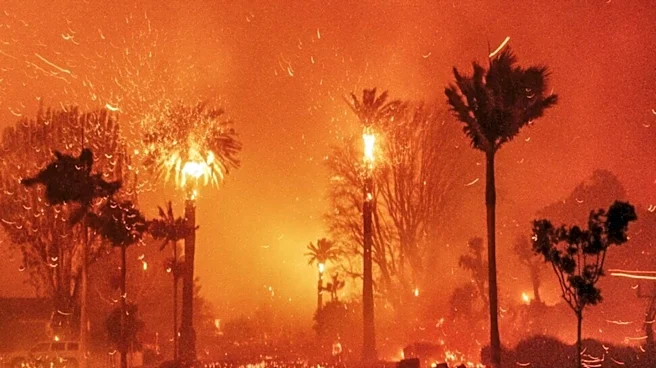
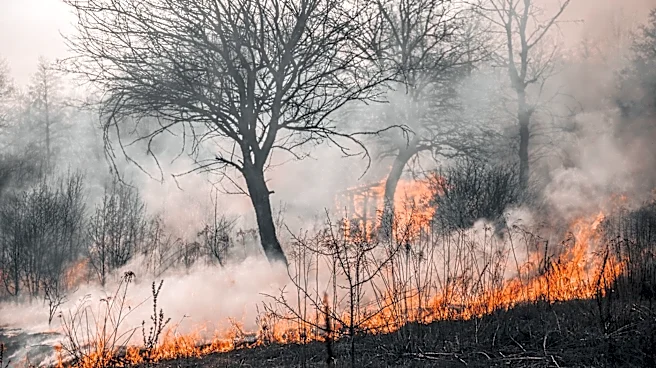
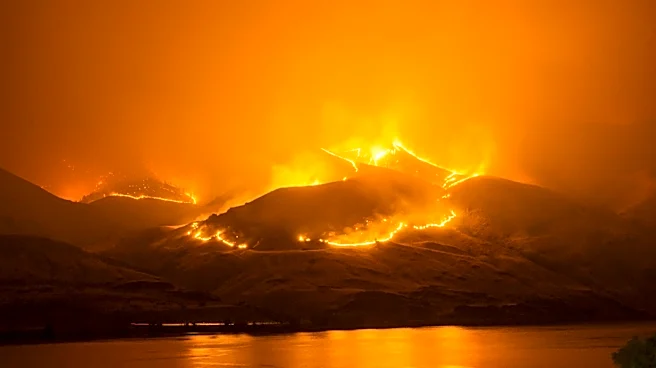
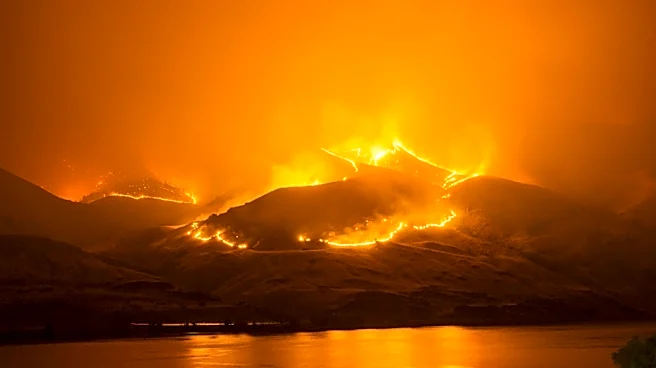
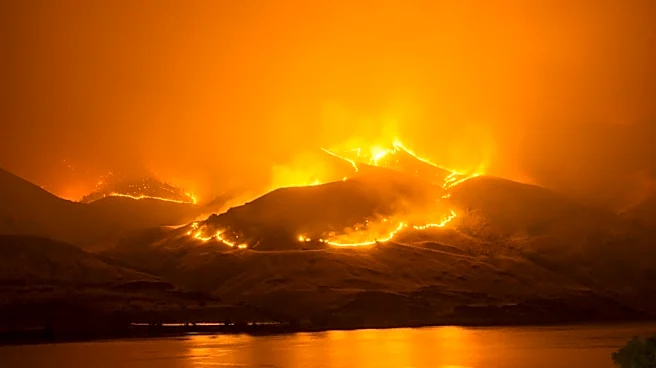
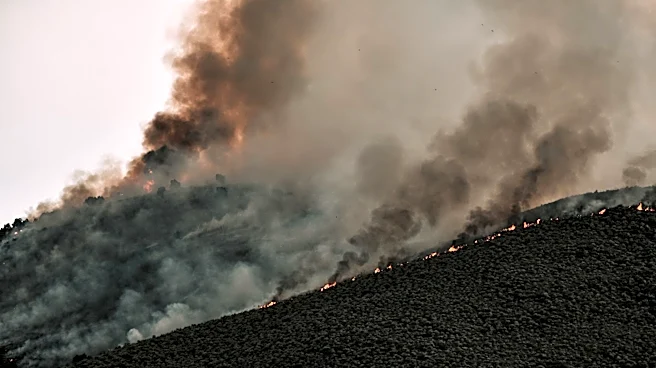
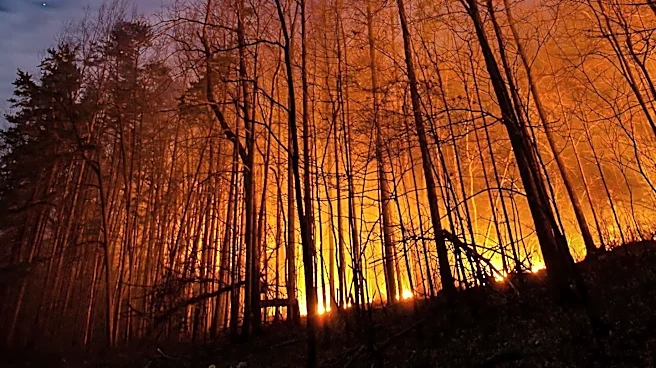
The Pacific Northwest is experiencing an unprecedented wildfire season, with over 1 million acres burned due to a series of dry thunderstorms in mid-July. These storms produced thousands of lightning strikes, igniting numerous wildfires across the region.
The fires are being fueled by hot temperatures, dry vegetation, low humidity, and gusty winds, leading to rapid spread. The Bureau of Land Management is leading a multi-agency response, with firefighters from Oregon and Idaho working to protect communities threatened by the Big Grass Fire, which has already scorched 301,000 acres. Governor Brad Little of Idaho has declared a disaster emergency, authorizing National Guard resources to assist in firefighting efforts.
Why It's Important?
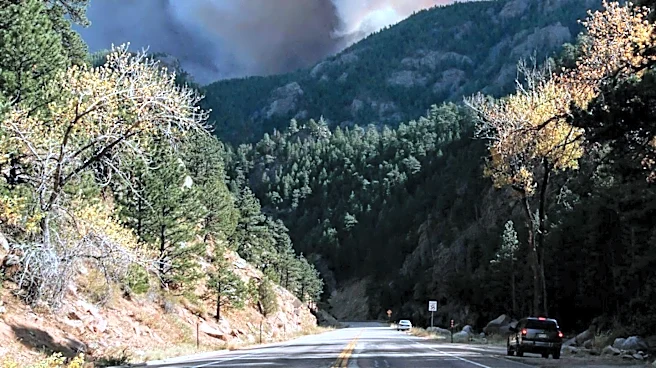
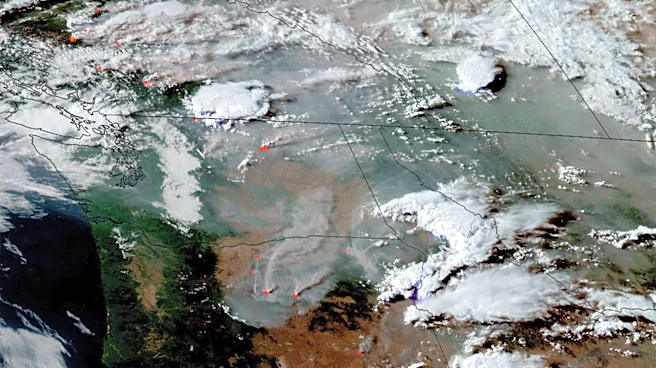
The wildfires pose significant threats to communities, infrastructure, and air quality across the Pacific Northwest. The rapid spread of these fires is straining national firefighting resources and degrading air quality across multiple states, with smoke reaching as far as North Dakota. The situation highlights the increasing frequency and intensity of wildfires, likely exacerbated by climate change, and underscores the need for enhanced fire management and prevention strategies. The economic and health impacts are substantial, affecting local economies, public health, and the environment.
What's Next?
Fire Weather Watches have been issued for parts of Washington, Idaho, and Montana, with conditions expected to worsen due to a dry cold front. This could lead to further spread of existing fires and the ignition of new ones. The ongoing firefighting efforts will continue to focus on protecting lives, homes, and critical infrastructure. The situation remains dynamic, with potential for further emergency declarations and resource deployments as conditions evolve.