







What's Happening?
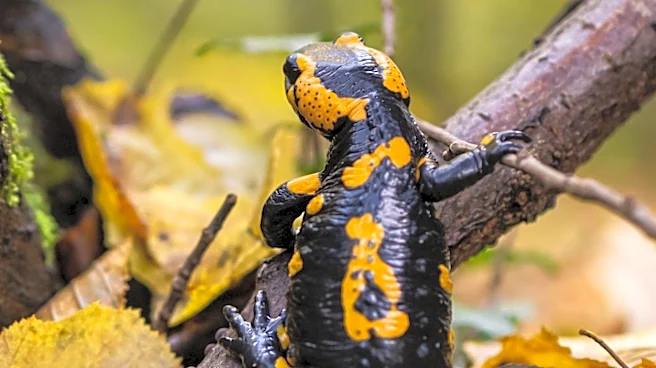
Keene, New Hampshire, is implementing a conservation initiative to build tunnels under roads to protect migrating amphibians, including the imperiled hybrid Jefferson/blue-spotted salamanders. This project aims to reduce amphibian deaths during their
seasonal migrations by providing safe passage under busy roads. The initiative follows successful examples in Vermont, where similar tunnels have significantly decreased amphibian mortality. The project is part of a broader effort to enhance habitat connectivity, allowing wildlife to move freely and safely across fragmented landscapes.
Why It's Important?
The construction of wildlife tunnels in Keene highlights the growing recognition of the importance of habitat connectivity in conservation efforts. As human development continues to fragment natural habitats, such initiatives are crucial for preserving biodiversity and supporting ecosystem health. By facilitating safe wildlife movement, these projects help maintain genetic diversity and resilience among species. The success of these tunnels could serve as a model for other regions facing similar conservation challenges, promoting the adoption of innovative solutions to protect wildlife.
Beyond the Headlines
This initiative reflects a shift in conservation strategies towards landscape-scale approaches that consider the broader ecological context. The project underscores the need for collaboration between local governments, conservation organizations, and communities to address environmental challenges. It also raises awareness about the impact of infrastructure on wildlife and the potential for integrating ecological considerations into urban planning. As public understanding of these issues grows, there may be increased support for policies and projects that prioritize ecological connectivity and sustainability.