






What's Happening?
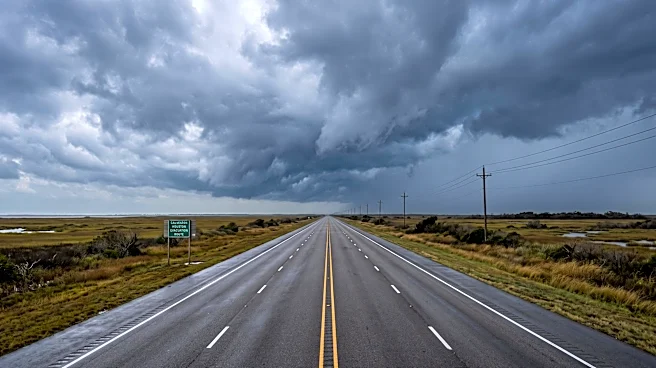
The Texas Gulf Coast continues to face significant challenges in hurricane preparedness and mass evacuations, nearly two decades after the chaotic Hurricane Rita evacuation in 2005. That event saw 3.5 million residents attempt to flee, resulting in 107
deaths, far exceeding the six fatalities directly caused by the storm. The region's lack of coordinated planning, including the absence of evacuation maps and zones, contributed to widespread traffic jams, fuel shortages, and heat-related illnesses. While improvements have been made, such as the creation of regional evacuation maps and routes by the Houston-Galveston Area Council (H-GAC), uncertainties remain regarding their effectiveness in a real-life mass emergency. Climate change is exacerbating the situation, leading to more intense and unpredictable storms that can rapidly intensify, shortening the critical window for evacuation planning. Furthermore, budget cuts to federal agencies like FEMA and the National Weather Service under the Trump Administration are raising concerns about the precision of forecasts and the potential for unnecessary, large-scale evacuations.
Why It's Important?
The ongoing struggles with hurricane preparedness on the Texas Gulf Coast highlight critical vulnerabilities in disaster management that have broad implications for public safety and economic stability. Inadequate evacuation protocols, as demonstrated by Hurricane Rita, can lead to significant loss of life, not from the storm itself, but from the evacuation process. This poses a direct threat to the well-being of millions of residents in a highly populated and economically vital region. The increasing unpredictability and intensity of hurricanes due to climate change mean that these challenges are becoming more urgent, potentially overwhelming existing infrastructure and emergency services. Budget cuts to key federal agencies responsible for weather forecasting and disaster response could further compromise the ability to provide timely and accurate information, leading to less effective evacuations and increased risks for coastal communities. The economic impact of poorly managed evacuations, including lost productivity, damaged property, and the cost of emergency services, can be substantial, affecting local and state economies.
What's Next?
Local authorities and emergency managers along the Texas Gulf Coast will continue to refine their evacuation plans and communication strategies in anticipation of future hurricane seasons. Efforts will likely focus on improving public awareness of evacuation routes and zones, and encouraging residents to register for assistance programs like the State of Texas Emergency Assistance Registry (STEAR). The construction of the 'Ike Dike,' a nearly $35 billion coastal defense system, is projected to take another 20 to 30 years, meaning that for the foreseeable future, evacuation remains the primary defense against major storms. The effectiveness of these updated plans will be tested during future hurricane events, and the coordination between local, county, state, and federal agencies will be crucial. The impact of reduced federal funding on forecasting accuracy and disaster response capabilities will also be a critical factor to monitor, potentially influencing the scale and success of future evacuations.
Beyond the Headlines
The challenges faced by the Texas Gulf Coast extend beyond immediate disaster response to touch upon deeper societal and ethical considerations. The decision to evacuate is not merely logistical but deeply personal, influenced by financial constraints, family dynamics, and trust in official information. Many residents, particularly those living paycheck-to-paycheck, face significant economic barriers to evacuation, highlighting issues of social equity in disaster preparedness. The proliferation of misinformation on social media, exacerbated by the rise of artificial intelligence, poses a growing threat to effective risk communication, potentially undermining public trust and compliance with evacuation orders. Furthermore, the long-term psychological toll on communities repeatedly threatened by severe weather, and the resilience required to rebuild and adapt, underscore the profound human dimension of climate change impacts. The ongoing debate over federal funding for disaster preparedness also reflects broader political priorities and the allocation of resources for climate adaptation versus other national concerns.