


What's Happening?
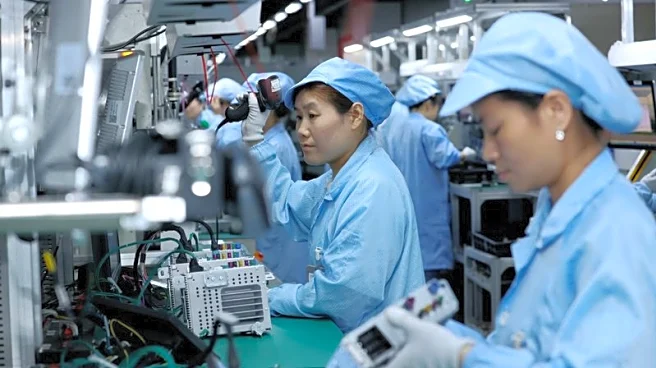
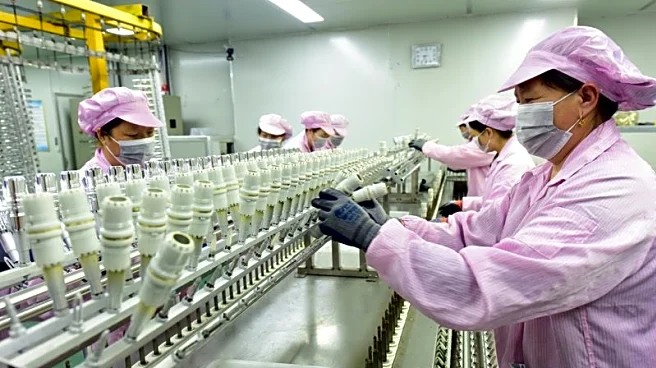
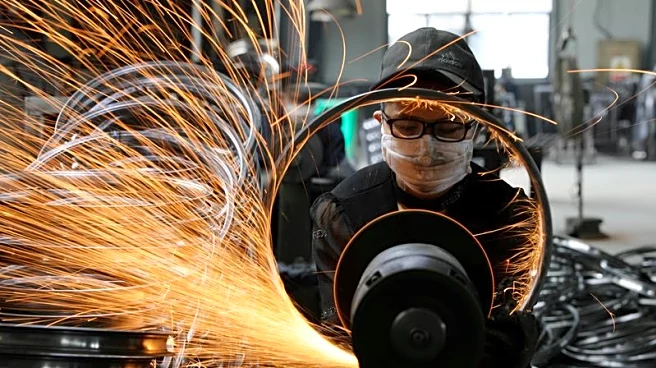
China's factory activity expanded at its fastest pace since December 2020, according to a private-sector survey by S&P Global. The RatingDog China General Manufacturing Purchasing Managers' Index (PMI) rose to 52.1 in February from 50.3 in January, surpassing
analysts' expectations. This growth is attributed to robust demand, which has bolstered manufacturers' confidence. The PMI reading above 50 indicates expansion, contrasting with an official survey that reported a contraction for the second consecutive month. The private survey highlighted a significant increase in new orders, both domestically and internationally, with export orders rising at the fastest rate since September 2020. Despite this growth, manufacturers remain cautious in hiring, with employment rising only slightly for the second consecutive month.
Why It's Important?
The expansion in China's manufacturing sector is significant as it suggests a recovery in global demand for Chinese goods, which could have implications for international trade dynamics. The U.S. Supreme Court's decision to rule against President Trump's emergency tariffs may further benefit China by narrowing the tariff gap with other countries, potentially enhancing its competitive edge. This development could influence U.S.-China trade relations, as the U.S. Trade Representative's office aims to manage bilateral trade for better balance and fairness. The increase in factory activity also reflects China's efforts to stabilize its economy amid challenges such as sluggish domestic consumption and a real estate slump.
What's Next?
The sustainability of China's manufacturing momentum will depend on continued demand and whether increased confidence translates into more active hiring and investment. The U.S. will continue to monitor China's compliance with a trade truce reached last year, which could affect future trade policies. Additionally, the impact of the U.S. tariff adjustments on China's export competitiveness will be closely watched by economists and policymakers.
Beyond the Headlines
The recent surge in China's factory activity highlights the complex interplay between global trade policies and domestic economic strategies. As China shifts its focus from high-speed to high-quality growth, the emphasis on technological advancements and self-reliance becomes crucial. This shift may lead to long-term changes in global supply chains and trade patterns, influencing how countries engage with China economically.