

What's Happening?
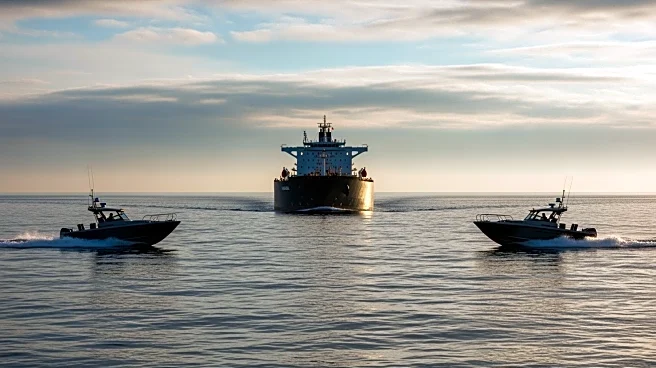
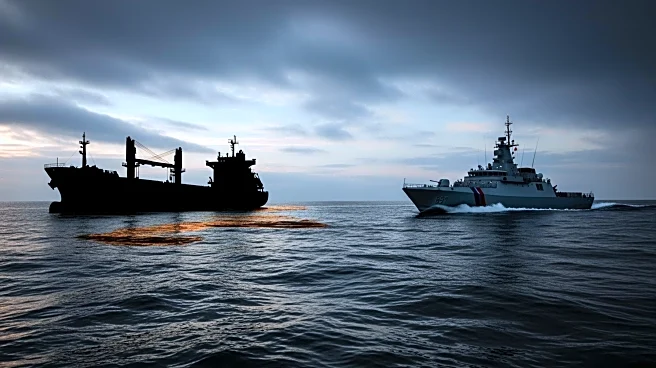
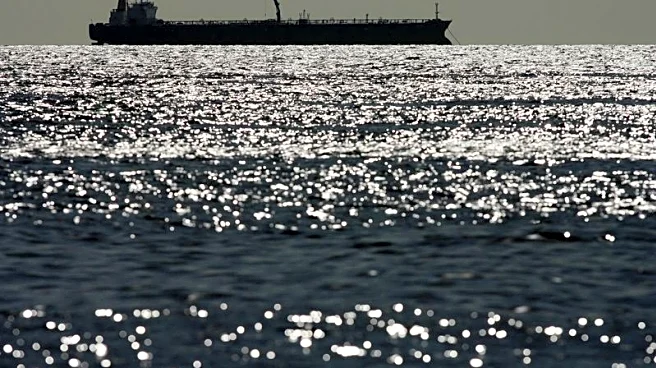
U.S. forces have intercepted a second merchant vessel off the coast of Venezuela in international waters, following President Trump's announcement of a blockade on sanctioned oil tankers. This action comes shortly after the seizure of an oil tanker on December
10. The operation is part of a broader strategy to enforce sanctions against Venezuela, aimed at curbing the country's oil exports. The U.S. officials involved in the operation have not been authorized to publicly discuss the details, indicating the sensitive nature of the military engagement.
Why It's Important?
The interception of vessels near Venezuela is a significant development in the U.S.'s ongoing efforts to exert pressure on the Venezuelan government. This move is likely to escalate tensions between the two countries and could have broader implications for international trade and diplomatic relations. The blockade aims to limit Venezuela's ability to generate revenue from oil exports, which could further strain the country's economy. Additionally, this action reflects the U.S.'s commitment to enforcing sanctions and could influence global oil markets, potentially affecting prices and supply chains.
What's Next?
The situation is expected to develop as the U.S. continues its enforcement of the blockade. Potential responses from Venezuela and its allies could include diplomatic protests or attempts to circumvent the blockade. The international community may also react, with some countries possibly criticizing the U.S.'s actions as a violation of international law. The ongoing military operations could lead to further confrontations at sea, raising the risk of escalation. Monitoring the situation will be crucial for stakeholders in the oil industry and international relations.