
What's Happening?
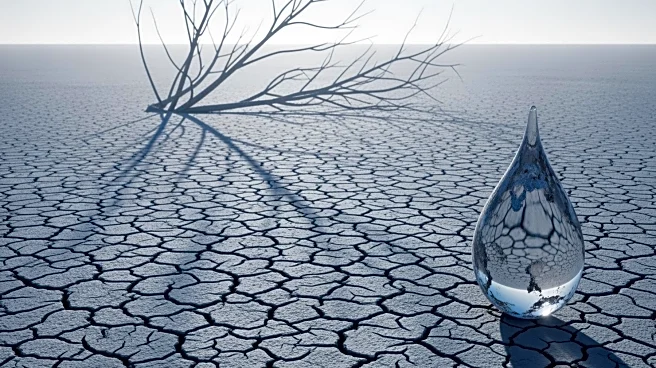
The United States is experiencing an unusual winter drought, affecting more than two-thirds of the country. This dry spell, the most severe since 2012, spans from the Pacific Northwest to the East Coast,
excluding only California. The drought is characterized by record-low snowfall and unseasonably warm temperatures, particularly impacting states like Utah, Wyoming, and Colorado. These conditions are critical as snowpack, which typically accumulates in winter, is essential for water supply and reducing wildfire risks in spring. Scott Fitzwilliams, former head of Colorado's White River National Forest, expressed concerns about the economic impact on ski resorts and the potential for a severe fire season. The drought is also affecting states like Georgia, Maine, and North Carolina, with severe drought conditions reported. In Utah, 93% of the state is experiencing drought, with temperatures nearly 10 degrees above average.
Why It's Important?
The widespread drought poses significant challenges for water management and wildfire prevention across the U.S. In the West, the lack of snowpack threatens water supplies and increases the risk of wildfires, which could have devastating effects on communities and ecosystems. Economically, the drought could impact industries reliant on winter tourism, such as ski resorts, and agriculture, particularly in the Plains and East, where soil moisture is crucial for crop production. The situation underscores the vulnerability of water resources in the West, where the Colorado River basin is already under stress. The drought also highlights the broader implications of climate patterns like La Niña, which have contributed to reduced moisture availability and fewer storms.
What's Next?
To alleviate the drought, significant precipitation is needed, particularly in the Intermountain West, where conditions are expected to persist or worsen. Long-term forecasts suggest little relief, although the South and East might see some improvement with potential storms emerging from the Gulf of Mexico. However, substantial moisture is required to address the deficits accumulated since midsummer. The coming months are critical for drought recovery, as cooler temperatures reduce evaporation rates, offering a window for potential improvement. Monitoring and managing water resources will be essential to mitigate the impacts of this prolonged dry spell.
Beyond the Headlines
The current drought situation highlights the complex interplay of climate patterns and their impact on weather extremes. The persistent La Niña conditions have weakened the southern jet stream, reducing storm activity and moisture availability. This pattern, coupled with marine heatwaves, underscores the influence of climate change on weather variability. The drought also raises questions about long-term water management strategies and the need for adaptive measures to address the increasing frequency of such events. As climate patterns continue to evolve, understanding these dynamics will be crucial for developing resilient systems to cope with future challenges.