




What's Happening?
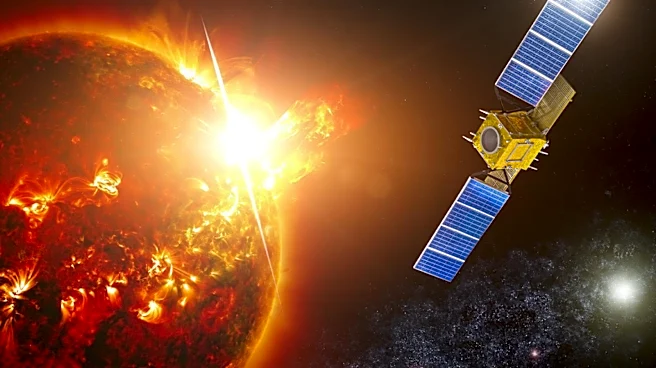
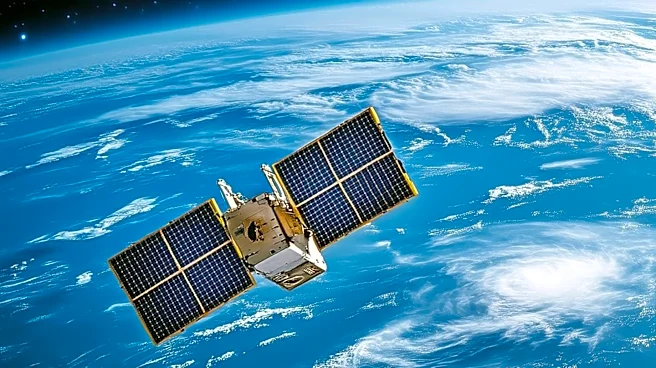
NASA's Starling mission has achieved a significant milestone in spacecraft autonomy by successfully demonstrating GPS-independent navigation using its FALCON (Fast Autonomous Lost-in-space Catalog-based Optical Navigation) technology. This new system
allows a satellite to determine its position in orbit by referencing other objects in space, such as other spacecraft and orbital debris, rather than relying on traditional GPS signals. The FALCON payload, a joint flight experiment by NASA and EraDrive, integrates EraDrive’s Era-Core flight software with Starling’s cameras and an onboard catalog of known space objects. This capability was tested through self-orbit determination and space object catalog updates, where FALCON refined the orbit estimates of over 200 objects without ground intervention over a three-day period.
Why It's Important?
This advancement is crucial for future space missions, particularly those beyond Earth's orbit where GPS signals are unreliable or unavailable. The ability for spacecraft to navigate autonomously and determine their own positions is vital for lunar satellite swarms, distributed science missions, and human exploration of the Moon and Mars. It reduces reliance on ground networks, enhancing operational independence and resilience. For space traffic management, autonomous navigation and catalog updates can improve collision avoidance and overall space situational awareness. The success of FALCON also highlights NASA's role in fostering commercial innovation, as the technology originated from a university project and is now being commercialized by EraDrive, demonstrating a pathway from research to practical application.
What's Next?
Later this year, the Starling mission plans to extend the FALCON experiment. This next phase will involve the four-spacecraft swarm sharing tracking data to collectively refine their positions, further enhancing the system's autonomy and precision. This collective data sharing will be a critical step towards developing coordinated networks of multiple GPS-free satellites, which are essential for supporting surface operations during future human exploration missions to the Moon or Mars. Additionally, the ongoing success of FALCON is expected to have broader implications for on-orbit space-traffic monitoring and alternative navigation methods, potentially leading to wider adoption of such autonomous technologies in both governmental and commercial space endeavors.
Beyond the Headlines
The success of the FALCON technology represents a paradigm shift in space navigation, moving towards a future where spacecraft are less dependent on constant human oversight and ground-based infrastructure. This increased autonomy could significantly reduce operational costs and risks for deep space missions, enabling more ambitious and complex explorations. Ethically, it raises questions about the increasing independence of machines in critical space operations and the balance between human control and artificial intelligence. Culturally, it reinforces the narrative of humanity's relentless pursuit of exploration and innovation, pushing the boundaries of what is possible in space. This development could also influence the design and capabilities of future satellite constellations, making them more robust and self-sufficient.