
What's Happening?
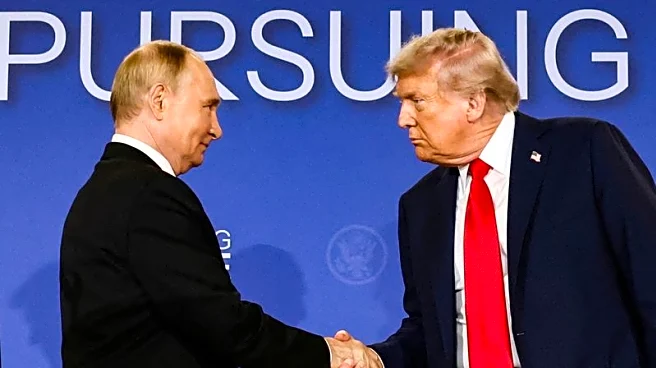
Ukrainian President Volodymyr Zelensky has revealed that President Trump has set a June deadline for Ukraine and Russia to reach a peace agreement to end the ongoing four-year war. Zelensky's comments suggest that the timing is influenced by the upcoming
November midterm elections in the United States. He expressed concerns that the U.S. might exert pressure on both parties to adhere to this schedule. Zelensky also voiced fears that the U.S. and Russia could potentially strike a bilateral deal excluding Ukraine, citing intelligence reports about a $12 trillion economic cooperation package presented by Russian envoy Kirill Dimitriev. The next round of trilateral talks is proposed to take place in Miami, marking the first time negotiations will occur in the U.S.
Why It's Important?
The deadline set by President Trump underscores the U.S.'s active role in seeking a resolution to the conflict between Ukraine and Russia. The involvement of the U.S. in these negotiations could significantly impact the geopolitical landscape, potentially altering alliances and power dynamics in Eastern Europe. The pressure to reach an agreement by June may influence the strategies and concessions made by both Ukraine and Russia. Additionally, the potential exclusion of Ukraine from bilateral agreements between the U.S. and Russia raises concerns about the sovereignty and security of Ukraine, which could have broader implications for regional stability.
What's Next?
The proposed trilateral talks in Miami could be a pivotal moment in the peace process, with the U.S. hosting negotiations for the first time. The outcome of these talks may determine the future of the conflict and the role of the U.S. in Eastern European affairs. Stakeholders, including political leaders and international organizations, will likely monitor these developments closely, as the resolution of this conflict could have far-reaching consequences for global diplomacy and security.