






What's Happening?
Baltimore Gas and Electric (BGE) has proposed a new surcharge that would add an estimated nine dollars per month to the bills of its Baltimore City customers, starting in January. This proposal is in response to increased fees imposed by Baltimore City on BGE for
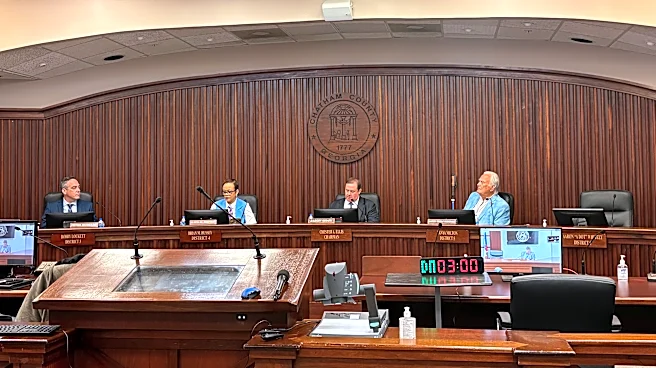
the utility's use of the city's underground conduit system. The Maryland Public Service Commission (PSC) held a virtual public hearing and comment session to gather input on BGE's proposed surcharge. City Council President Zeke Cohen has publicly opposed the proposal, characterizing it as a 'money grab' by the utility. Another public meeting regarding this matter is scheduled for November 4th, with the PSC expected to render a decision in January.
Why It's Important?
This proposed surcharge carries significant implications for Baltimore City residents and the broader regulatory landscape. If approved, it would directly increase the cost of living for BGE customers in the city, potentially impacting household budgets, especially for low-income residents. The dispute highlights the ongoing tension between utility companies and municipal governments over infrastructure usage fees. The outcome of the PSC's decision could set a precedent for how similar costs are passed on to consumers in other jurisdictions. For BGE, securing approval for the surcharge would allow it to offset increased operational costs, while a denial would require the company to absorb these expenses or seek alternative solutions, potentially affecting its financial performance and future investment strategies in the city's infrastructure.
What's Next?
The Maryland Public Service Commission is scheduled to hold another public meeting on November 4th to continue gathering information and public comments regarding BGE's proposed surcharge. Following this, the PSC is expected to make a final decision on the proposal in January. Key stakeholders, including Baltimore City officials, consumer advocacy groups, and BGE, will be closely monitoring these proceedings. Depending on the PSC's ruling, there could be further actions from either side. If the surcharge is approved, Baltimore City residents will see an increase in their utility bills. If denied, BGE may explore other avenues to recover the increased conduit fees, or the city and BGE may need to renegotiate the terms of the conduit system usage.
Beyond the Headlines
The debate over BGE's proposed surcharge extends beyond immediate financial implications, touching upon broader issues of urban infrastructure management and utility regulation. The city's decision to increase conduit fees reflects the ongoing need for municipalities to fund maintenance and upgrades of critical infrastructure, often leading to increased costs for utility providers. This situation underscores the complex relationship between public services, private utilities, and consumer burden. It also raises questions about the transparency and fairness of cost allocation in regulated industries. The outcome could influence future negotiations between cities and utilities nationwide regarding the use of public rights-of-way and infrastructure, potentially shaping how such costs are managed and ultimately borne by the end-users.