





What's Happening?
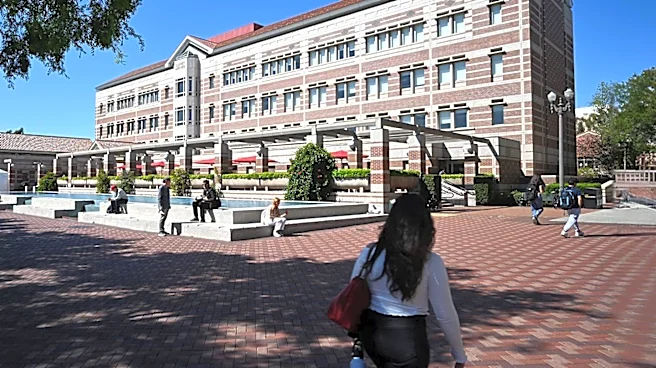
UCLA is facing calls to expand its Central American Studies course catalog to better serve its growing Hispanic and Latino student population and provide a more comprehensive understanding of Central American history and culture. The university has seen
an increase in Latino first-year students, now comprising 26% of the 2024-25 class, and Latino transfer students, who make up 28%. Despite this demographic shift, the availability of specific Central American studies courses remains limited. Helen Burgos-Ellis, a continuing lecturer in the Chicana/o and Central American Studies department, noted the significant growth in Latin American courses since her undergraduate years but emphasized the ongoing need for expansion. Floridalma Boj Lopez, an assistant professor in the same department, highlighted that these courses offer crucial historical context beyond cultural traditions, such as the formation of Central American nations and reasons for migration. The push for expansion aligns with UCLA's pursuit of recognition as a Hispanic Serving Institution, which requires a 25% Hispanic or Latino undergraduate student body.
Why It's Important?
The expansion of Central American Studies at UCLA is significant for several reasons. Firstly, it directly addresses the academic and cultural needs of a substantial and growing segment of the student body, ensuring that Latino students see their histories and experiences reflected in the curriculum. This can foster a stronger sense of belonging and academic engagement. Secondly, it enriches the educational experience for all students by providing diverse perspectives on history, immigration, and global connections, which are increasingly relevant in a multicultural society. Understanding Central American history, including U.S. policies like the denial of asylum to Salvadorans in the 1980s, offers critical insights into contemporary issues. Furthermore, strengthening this department could bolster UCLA's efforts to achieve Hispanic Serving Institution status, which can unlock federal funding and resources to further support Latino students and related academic programs. This move could also set a precedent for other universities with diverse student populations to re-evaluate and expand their cultural and ethnic studies offerings.
What's Next?
The immediate next steps for UCLA would likely involve internal discussions within the Chicana/o and Central American Studies department and with university administration regarding resource allocation and curriculum development. Advocates will likely continue to press for increased funding for new faculty hires specializing in Central American studies and the creation of new courses. Student organizations and faculty groups may organize to raise awareness and build support for these initiatives. If the university commits to expansion, it would involve a multi-year process of curriculum design, faculty recruitment, and program implementation. The success of these efforts could influence UCLA's standing as a Hispanic Serving Institution and potentially inspire similar curriculum enhancements at other universities across the U.S. as they adapt to changing student demographics and educational needs.
Beyond the Headlines
Beyond the immediate academic implications, the call for expanded Central American Studies at UCLA touches upon broader themes of representation, historical understanding, and institutional responsiveness. It highlights the ongoing challenge for educational institutions to evolve their curricula to reflect the diverse backgrounds and intellectual interests of their student populations. The historical context provided by such studies, particularly regarding U.S. involvement in Central America and immigration policies, can foster a more nuanced understanding of current geopolitical and social issues. Ethically, it speaks to the responsibility of universities to provide inclusive educational environments where all students can explore their heritage and contribute to a richer academic discourse. Culturally, it validates the importance of Central American narratives, which have often been marginalized in mainstream academic settings. This development could contribute to a long-term shift in how Central American history and culture are integrated into higher education, moving beyond a peripheral status to a more central role in understanding American society and its global connections.