



What's Happening?
China has been expanding and upgrading several nuclear-related sites in Sichuan Province, as reported by The New York Times. This development is part of Beijing's broader strategy to modernize and expand its nuclear arsenal. The upgrades are occurring
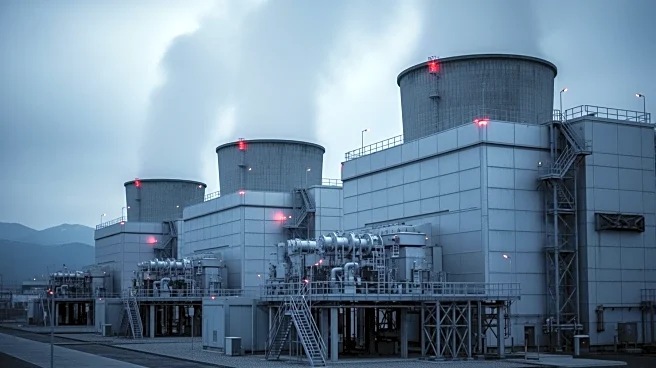
at secret research locations such as Zitong and Pingtong, which were initially constructed under Mao Zedong's 'Third Front' initiative to protect sensitive weapons work. The recent expiration of the New START treaty between the United States and Russia has intensified global arms-control tensions. Analysts have noted significant investments in these sites since 2019, with Pingtong featuring a refurbished main structure and a 360-foot-high ventilation stack. The Pentagon estimates that China had over 600 nuclear warheads by the end of 2024 and could reach 1,000 by 2030. Despite having a smaller stockpile than the US and Russia, China has shown little interest in joining arms-control frameworks.
Why It's Important?
The expansion of China's nuclear capabilities is a significant point of friction with Washington, which advocates for Beijing's inclusion in future arms-control agreements. The expiration of the New START treaty has left a void in formal nuclear arms limits, prompting the US to call for broader discussions that include China. However, Beijing has resisted being bound by US-Russia frameworks. The potential increase in China's nuclear arsenal could influence crisis behavior, particularly in scenarios involving Taiwan. The situation is further complicated by US allegations of secret nuclear tests by China, which Beijing denies. This development could impact global security dynamics and arms-control efforts.
What's Next?
With the expiration of the New START treaty, the US is likely to continue pushing for China's involvement in arms-control discussions. However, China's resistance to such frameworks suggests that diplomatic efforts may face significant challenges. The international community may need to explore new strategies to address the growing nuclear capabilities of China and ensure global security. The situation could lead to increased diplomatic tensions and necessitate new arms-control initiatives.