

What's Happening?
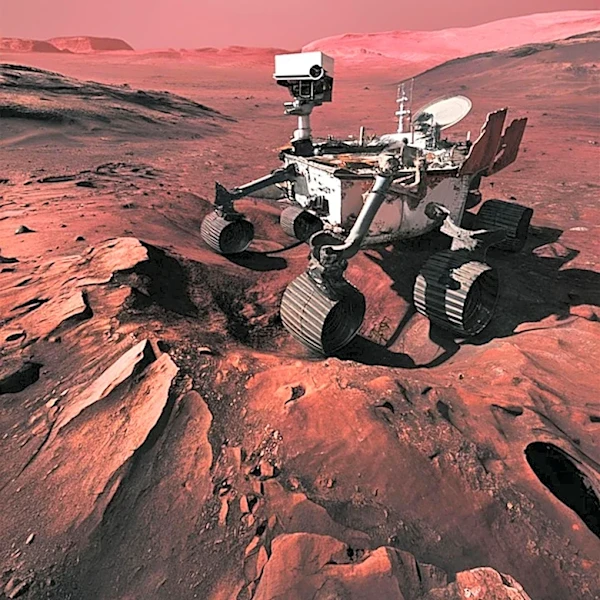
NASA has highlighted the extreme temperature variations on Mars, particularly near the equator at noon. Due to the planet's thin atmosphere, the ground temperature can reach 24 degrees Celsius while the air temperature remains below freezing. This phenomenon
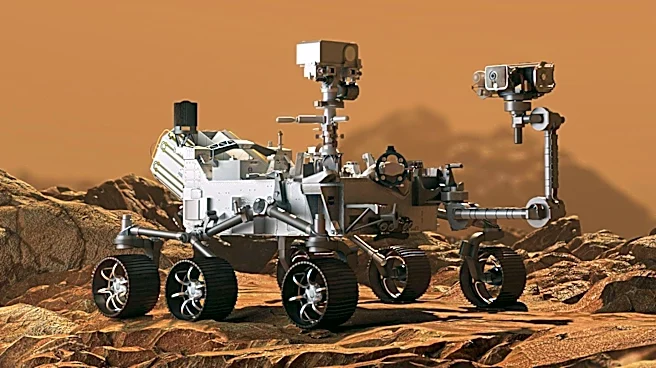
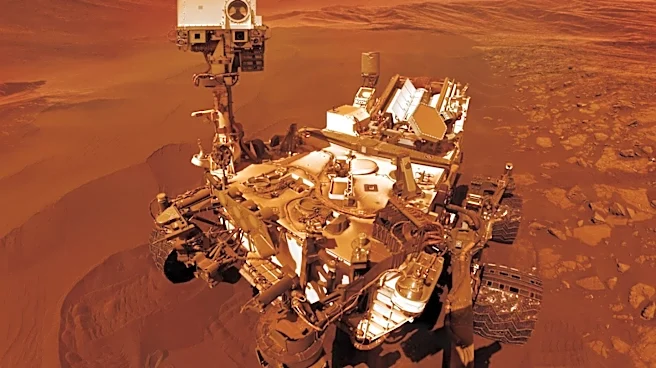
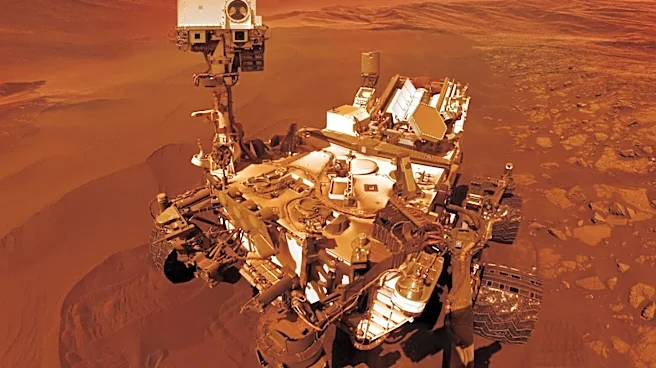
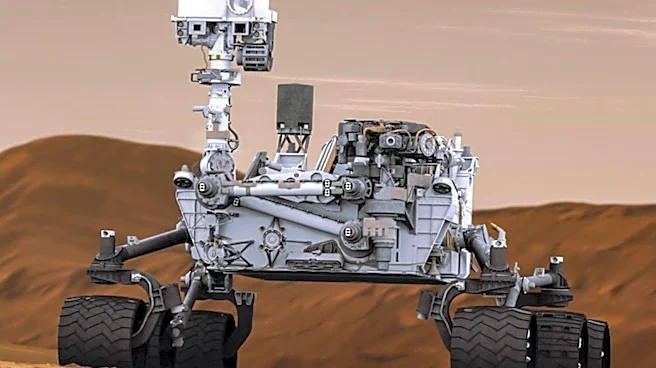
occurs because the Martian atmosphere is too sparse to effectively transfer heat from the ground to the air, resulting in a significant temperature gradient over just a couple of meters. NASA's Mars Environmental Dynamics Analyzer (MEDA) on the Perseverance rover has measured these variations, showing that the surface can warm significantly during the day while the air remains cold. This unique climate condition is a result of Mars' thin atmosphere, which is less than one percent the pressure of Earth's atmosphere at sea level.
Why It's Important?
Understanding Mars' temperature variations is crucial for future exploration and potential colonization. The extreme temperature differences between the ground and air pose challenges for designing habitats and equipment that can withstand such conditions. The thin atmosphere also affects the efficiency of heat transfer, which is a critical factor for maintaining life-support systems. These insights are vital for planning long-term missions and ensuring the safety and sustainability of human presence on Mars. Additionally, the data collected by NASA's instruments can help refine climate models and improve our understanding of Martian weather patterns, which is essential for future exploration strategies.
What's Next?
Future missions to Mars will need to consider these temperature variations when designing equipment and habitats. Engineers will have to develop systems that can manage the rapid temperature changes and protect astronauts from the harsh conditions. NASA and other space agencies may continue to study these phenomena to improve their understanding and develop more effective solutions for thermal management. As exploration efforts progress, these findings will inform the design of sustainable living environments and contribute to the success of human missions to Mars.
Beyond the Headlines
The extreme temperature gradients on Mars highlight the challenges of adapting human technology to alien environments. The need for advanced thermal management systems underscores the importance of innovation in space exploration. These conditions also offer a unique opportunity to study atmospheric dynamics in a low-pressure environment, which could provide insights into similar processes on other planets. The research conducted on Mars may also have applications on Earth, particularly in understanding and mitigating the effects of climate change.