
What's Happening?
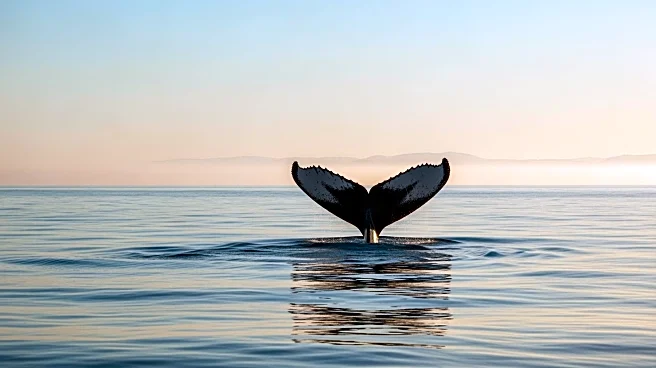
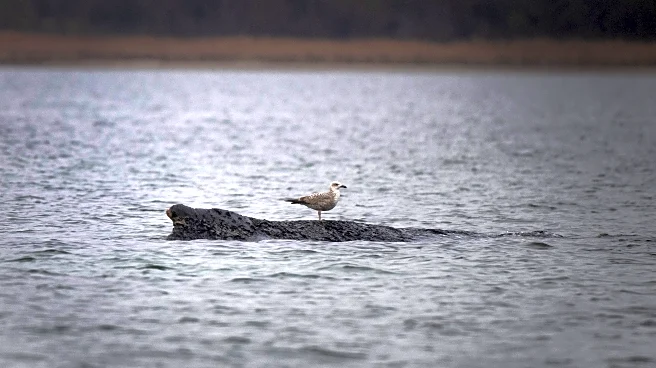
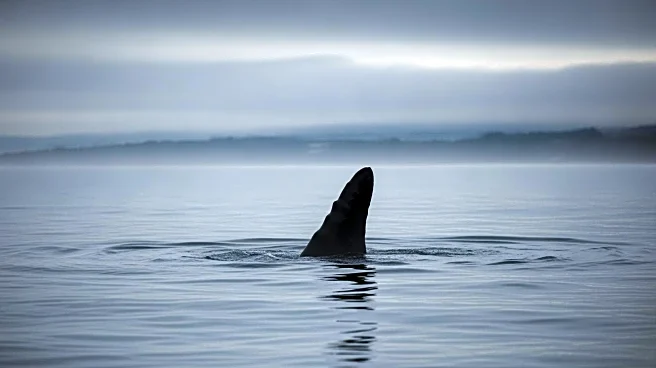
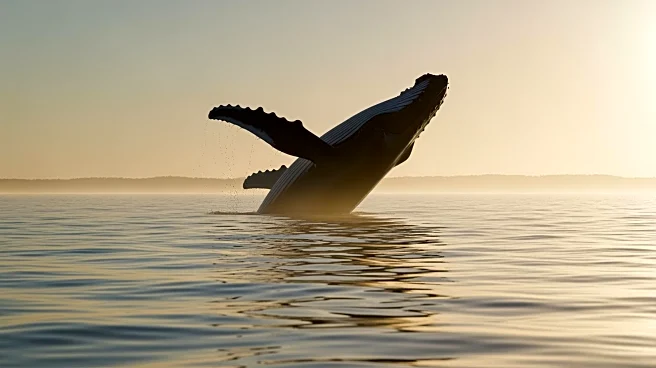
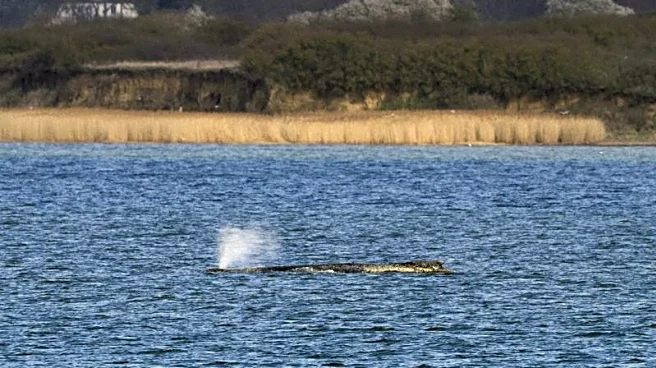
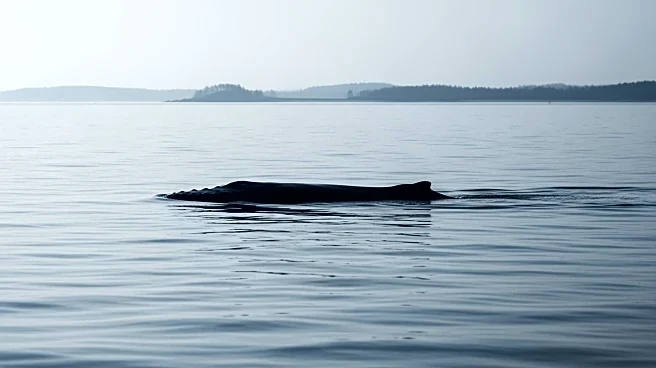
A humpback whale has been repeatedly stranded off Germany's Baltic Sea coast, with the latest incident occurring near the port of Wismar. The whale, measuring between 39 to 49 feet, was initially freed from a sandbank with the help of an excavator but
became stranded again. Rescuers, including Greenpeace and local authorities, are working to guide the whale back to deeper waters. The whale's skin condition, affected by the low salt concentration of the Baltic Sea, prevents the attachment of a tracking device. The goal is to navigate the whale through Danish waters into the North Sea and eventually back to the Atlantic Ocean, its natural habitat.
Why It's Important?
The situation highlights the challenges faced by marine life when they stray from their natural habitats. The whale's repeated stranding underscores the potential impacts of environmental changes and human activities on marine ecosystems. Successful rescue efforts could provide valuable insights into marine conservation strategies and the importance of maintaining natural habitats for marine species. The incident also draws attention to the need for international cooperation in marine wildlife rescue operations, as the whale's journey involves navigating through multiple territorial waters.
What's Next?
Rescuers plan to continue monitoring the whale's movements and provide assistance as needed to ensure it reaches the North Sea. The situation may prompt discussions among environmental groups and policymakers about measures to prevent similar incidents in the future. There may also be increased efforts to study the whale's behavior and health to better understand the factors contributing to its stranding.