



What's Happening?
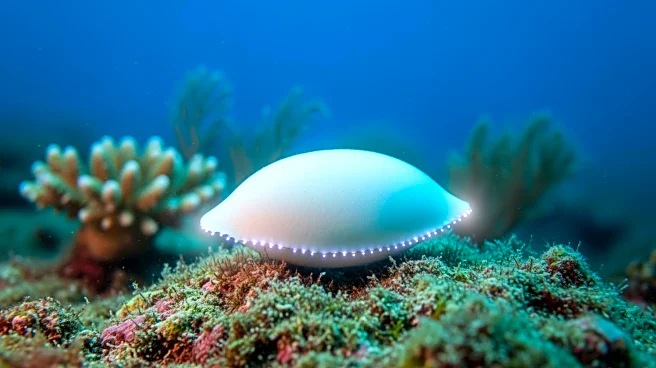
Researchers at James Cook University have discovered that epaulette sharks, also known as 'walking sharks,' can reproduce and lay eggs without a measurable increase in energy use. This finding challenges the common assumption that reproduction is energetically
costly for most species. The study, led by Professor Jodie Rummer, involved measuring the metabolic rates of these sharks during their reproductive cycle. Surprisingly, the sharks maintained stable oxygen uptake and hormone levels, indicating no significant rise in energy expenditure. This adaptation may allow epaulette sharks to continue reproducing even under environmental stress, such as warming oceans. The research highlights the resilience of these sharks and suggests that they may be able to sustain reproductive output despite adverse conditions.
Why It's Important?
The discovery that epaulette sharks can reproduce without increased energy expenditure has significant implications for understanding marine biology and the resilience of species to environmental changes. As climate change continues to impact ocean temperatures, the ability of certain species to adapt and maintain reproductive success is crucial for their survival. This research provides insights into the physiological adaptations that may help some marine species withstand environmental stressors. It also underscores the importance of studying and preserving marine biodiversity, as healthy shark populations contribute to the overall health of coral reef ecosystems. The findings could inform conservation strategies and efforts to protect vulnerable marine species in the face of climate change.