







What's Happening?
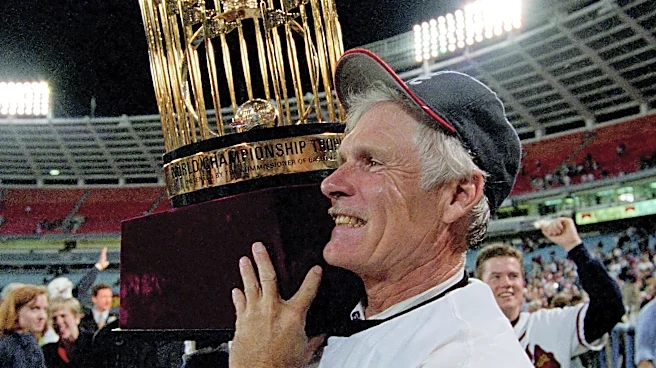
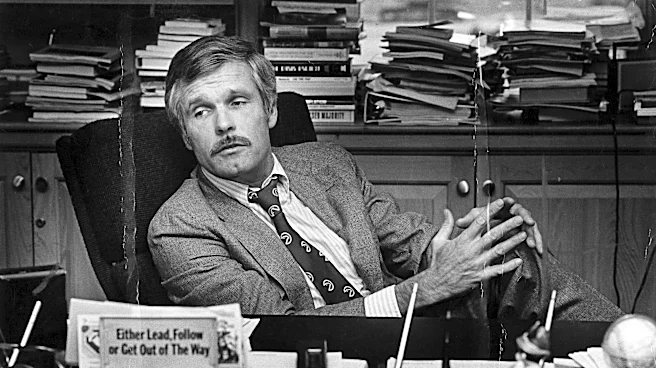
Ted Turner, the founder of CNN, passed away on May 6, leaving behind a legacy that fundamentally reshaped how news is consumed in America. Turner, who was also known for his ownership of the Atlanta Braves and his marriage to Jane Fonda, launched CNN in 1980,
pioneering the 24-hour news cycle. This innovation not only changed media consumption but also influenced the creation of other networks like Fox News, founded by Rupert Murdoch in 1996. Turner's approach to news has been both celebrated for its groundbreaking nature and critiqued for contributing to today's polarized media environment. His model of continuous news coverage has become ubiquitous, yet it has also been linked to increased partisanship and media-induced stress among consumers.
Why It's Important?
Turner's creation of the 24-hour news network has had a profound impact on the media landscape, influencing how information is disseminated and consumed. This model has led to the rise of other major networks and has played a role in shaping public discourse. However, the constant demand for content has also been associated with increased partisanship and a cycle of negativity in media coverage. The legacy of Turner's innovation is a double-edged sword, offering both greater access to information and contributing to media-induced stress and polarization. As media consumption habits continue to evolve, Turner's influence remains a critical point of reflection for the industry.