
What's Happening?
President Trump has announced plans to lift some sanctions on oil-producing countries in response to the ongoing conflict between the U.S., Israel, and Iran. This decision comes as global energy markets experience significant volatility, with crude oil prices
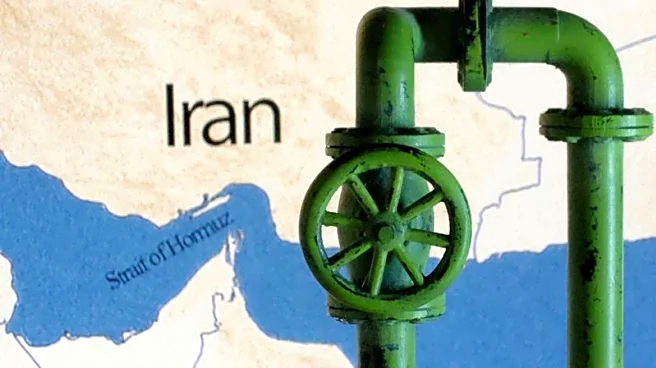
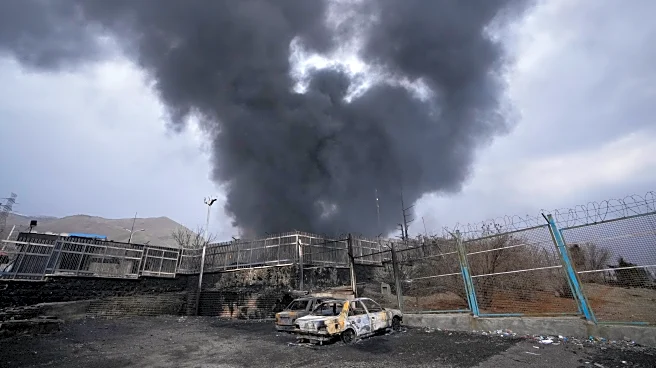
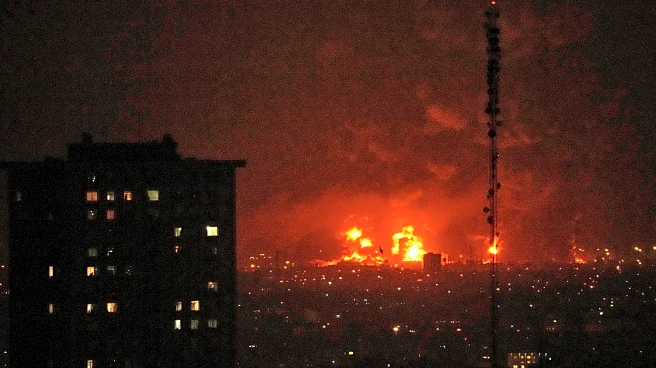
initially soaring to nearly $120 a barrel before dropping below $90. The conflict has led to the closure of the Strait of Hormuz, a critical passage for about one-fifth of the world's oil supply, causing major disruptions in the Gulf region's oil production. Trump did not specify which countries would benefit from the sanctions relief, but reports suggest that easing sanctions on Russia is under consideration to stabilize oil prices. The U.S. Treasury has already issued a 30-day waiver on Russian oil sales to India. The situation remains tense as the U.S. and Israel continue military operations against Iran, with President Trump expressing optimism about a swift resolution.
Why It's Important?
The lifting of sanctions on certain oil producers is a strategic move to mitigate the impact of the conflict on global oil prices and supply. The closure of the Strait of Hormuz has already caused significant disruptions, and prolonged instability could lead to further economic consequences, including potential spikes in oil prices. This decision could provide temporary relief to global markets and consumers facing rising energy costs. However, it also highlights the geopolitical complexities of the region and the potential for further escalation. The U.S. administration's actions may influence international relations, particularly with countries like Russia, which could see a temporary easing of economic pressures.
What's Next?
The global energy market will closely monitor the situation as the conflict continues. Stakeholders, including oil producers and consumers, will be assessing the impact of the sanctions relief and any further developments in the U.S.-Iran conflict. The potential reopening of the Strait of Hormuz and the stabilization of oil prices will be critical factors in determining the next steps for global energy policy. Additionally, political leaders and international organizations may engage in diplomatic efforts to de-escalate tensions and ensure the security of energy supplies.