





What's Happening?
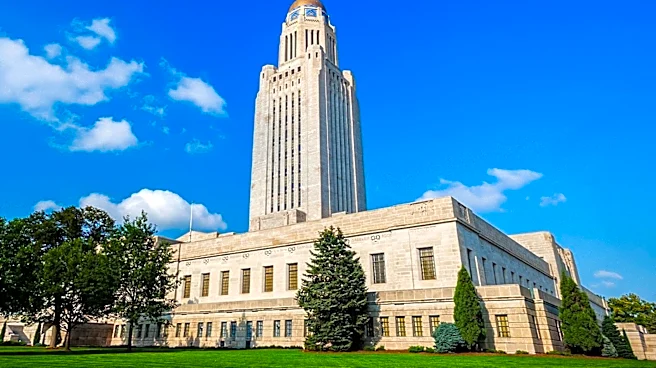
Cindy Burbank, the Democratic nominee for the U.S. Senate race in Nebraska, has filed paperwork to remove herself from the November ballot. This decision is aimed at paving the way for independent candidate Dan Osborn to challenge the incumbent Republican
Senator Pete Ricketts. Burbank's move follows her earlier statements that she would withdraw if she saw no path to victory. The Nebraska Secretary of State's office confirmed the receipt of her withdrawal request. However, Secretary of State Bob Evnen, a Republican, has indicated that he may not accept Burbank's withdrawal, pending guidance from the state Attorney General. Burbank's campaign has been relatively quiet since her primary win, focusing instead on supporting nonpartisan House candidate Austin Ahlman.
Why It's Important?
Burbank's withdrawal could significantly impact the dynamics of the Nebraska Senate race. By stepping aside, she aims to consolidate support behind Dan Osborn, who has the endorsement of the state Democratic Party. This move could potentially increase Osborn's chances against Ricketts, who has a financial advantage. The situation also highlights the complexities of election laws and the power of state officials in determining ballot access. The outcome of this decision could influence future political strategies and candidate endorsements in Nebraska and beyond.
What's Next?
The Nebraska Secretary of State will seek guidance from the Attorney General on whether Burbank's withdrawal can be accepted. This decision will determine if Burbank remains on the ballot or if Osborn will face Ricketts without a Democratic contender. The response from the Attorney General's office will be crucial in shaping the final lineup for the November election. Meanwhile, political campaigns and stakeholders will be closely monitoring the situation, preparing for various scenarios that could unfold.