



What's Happening?
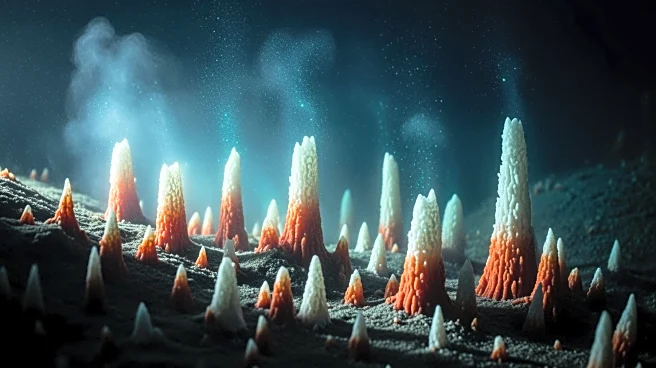
The Lost City Hydrothermal Field, located over 700 meters beneath the ocean surface near the Mid-Atlantic Ridge, is a unique geological formation that has intrigued scientists since its discovery in 2000. This field, characterized by towering carbonate
structures, is the longest-lived venting environment known in the ocean. It produces hydrocarbons through chemical reactions on the seafloor, supporting microbial communities without sunlight or atmospheric carbon dioxide. The field's unique conditions suggest it could resemble environments where life might have originated, both on Earth and potentially on other celestial bodies. Despite its scientific importance, the area faces threats from deep-sea mining activities, prompting calls for its protection.
Why It's Important?
The Lost City offers a rare glimpse into the potential origins of life, providing a natural laboratory for studying prebiotic chemistry and microbial ecosystems. Its unique environment challenges existing theories about life's beginnings, suggesting alternative pathways for life's emergence. The field's preservation is crucial for ongoing scientific research, as it could yield insights into the conditions necessary for life on other planets. The threat of mining underscores the need for international cooperation in protecting such irreplaceable natural wonders, balancing resource extraction with conservation.
What's Next?
There is a growing movement among scientists to have the Lost City designated as a World Heritage site to ensure its protection. This would involve international collaboration to regulate activities in the area and prevent potential ecological damage from mining. Continued research is expected to focus on understanding the field's unique chemistry and its implications for astrobiology. The scientific community is likely to advocate for policies that prioritize the preservation of such critical environments, emphasizing their value for future generations.