



What's Happening?
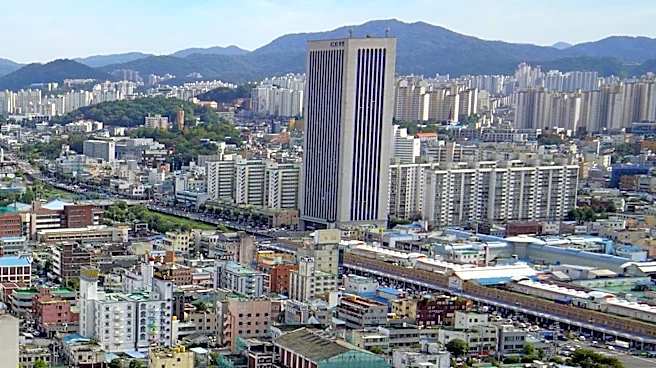
The term 'urban' broadly refers to anything connected with a city, town, or a densely populated, developed area. Its meaning can subtly shift based on context, but it consistently links subjects to city environments, including their populations, buildings,
services, and lifestyles. For instance, 'urban life' or 'urban development' directly connect these concepts to city settings. The word is primarily used as an adjective, describing nouns like 'urban population' or 'urban planning.' While there isn't a universal population threshold defining an urban area, it generally implies a more developed and densely populated environment compared to rural areas. The word's origin traces back to the Latin 'urbanus,' meaning 'connected with a city,' and its usage expanded significantly with industrialization and the growth of cities, as societies needed clearer ways to differentiate developed centers from agricultural regions. Today, 'urban' is applied across various fields, including geography, architecture, economics, sociology, and public health, reflecting its expanded meaning to encompass lifestyles, communities, culture, and infrastructure associated with city environments.
Why It's Important?
Understanding the precise meaning and nuances of 'urban' is crucial for accurate communication and analysis across numerous sectors in the U.S. and globally. In policy-making and urban planning, distinguishing urban from rural and suburban areas is fundamental for resource allocation, infrastructure development, and addressing specific challenges like housing, transportation, and environmental management. For businesses, understanding urban demographics and lifestyles is vital for market research, product development, and strategic location planning. In social contexts, the term helps in discussing cultural trends, community dynamics, and the impact of urbanization on different population groups. Misconceptions, such as equating 'urban' solely with downtown areas, modernity, or poverty, can lead to flawed analyses and ineffective solutions. For example, recognizing that urban areas encompass diverse neighborhoods, economic strata, and historical contexts allows for more nuanced approaches to social equity and economic development. The distinction from 'metropolitan' (a major city and its surrounding region) and 'municipal' (local government) further refines discussions about governance and regional planning, impacting how services are delivered and how communities are structured.
What's Next?
As urbanization continues globally, the term 'urban' will remain central to discussions about future development, sustainability, and societal changes. Ongoing research in fields like urban planning, environmental studies, and public health will continue to refine the understanding of urban environments and their impacts. Policy discussions will likely focus on how to manage rapid urban growth, ensure equitable access to resources within urban areas, and mitigate environmental challenges such as pollution and climate change in densely populated regions. The evolution of technology and social media will also continue to shape how 'urban' is perceived and discussed, with online platforms serving as spaces for sharing experiences and perspectives on city life. Furthermore, the increasing interconnectedness of global cities will necessitate a more standardized and comprehensive understanding of urban characteristics to facilitate international collaboration on shared challenges and opportunities.
Beyond the Headlines
The concept of 'urban' extends beyond simple geographical classification, touching upon profound societal and cultural shifts. The concentration of populations in urban areas often leads to unique social dynamics, fostering diverse cultural expressions, innovation, and economic opportunities, but also presenting challenges like social inequality, infrastructure strain, and mental health concerns. The 'urban aesthetic' in photography, fashion, and art reflects a distinct cultural identity shaped by city life. Ethically, urban development raises questions about gentrification, displacement, and the preservation of historical and cultural heritage. Legally, zoning laws and land use policies in urban areas are constantly evolving to balance economic growth with environmental protection and community needs. The long-term shift towards an increasingly urbanized world means that understanding the multifaceted nature of 'urban' is not just an academic exercise but a critical tool for navigating the complexities of modern human existence and shaping a sustainable future.