
What's Happening?
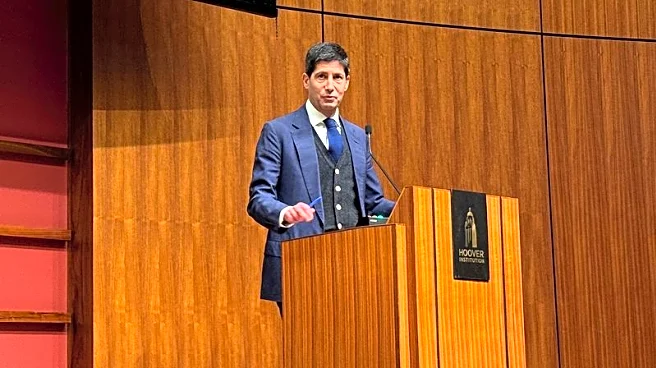
Federal Reserve Governor Christopher Waller has stated his intention to emphasize the importance of central bank independence during his upcoming interview with President Trump. Waller is one of five candidates
being considered to succeed Jerome Powell as the Federal Reserve Chairman when Powell's term ends in May. Waller, who has a long history of advocating for central bank independence, plans to highlight this during his discussion with the President. President Trump has been vocal about his dissatisfaction with the Federal Reserve's pace in cutting interest rates and has previously criticized Powell, raising concerns about potential political influence over the Fed. Waller, however, noted that the President's views on monetary policy are already well-known through his public statements.
Why It's Important?
The independence of the Federal Reserve is a cornerstone of its ability to manage monetary policy effectively without political interference. Waller's emphasis on this principle is significant as it addresses concerns about potential political pressure on the Fed, especially given President Trump's past criticisms of the institution. The selection of a new Fed Chair who prioritizes independence could reassure investors and maintain confidence in the U.S. financial system. Conversely, any perceived erosion of this independence could lead to market instability and undermine the Fed's credibility. The outcome of this selection process will have implications for U.S. economic policy and the global perception of the Fed's autonomy.
What's Next?
As the selection process for the new Federal Reserve Chair continues, stakeholders will closely monitor the President's decision. The choice of a candidate who upholds the Fed's independence could stabilize markets and reinforce the institution's role in managing economic policy. However, if a candidate perceived as politically aligned with the President is chosen, it could lead to increased scrutiny and potential market volatility. The decision will also influence future monetary policy directions, including interest rate adjustments and responses to economic challenges.