



What's Happening?
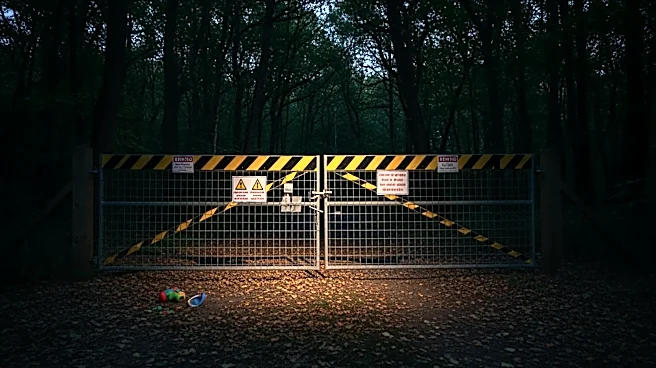
A 17-month-old toddler was injured at ZooAmerica, located within Hersheypark in Pennsylvania, after crawling into a restricted area near a wolf enclosure. The incident occurred when the child managed to get under a perimeter fence and approached a metal
barrier surrounding the wolves' habitat. While the toddler's parents were reportedly distracted by their phones, the child stuck their hand through the fence, prompting a wolf to briefly take the child's fingers into its mouth. ZooAmerica officials described the wolf's behavior as typical investigatory behavior, which involves mouthing unfamiliar objects without intent to harm. The child sustained only minor injuries, and bystanders quickly intervened to remove the toddler from the situation. The parents, identified as Carrie Sortor and Stephen Wilson, have been charged with a first-degree misdemeanor for endangering the welfare of a child.
Why It's Important?
This incident highlights the critical importance of parental supervision in environments where wildlife is present. Zoos and wildlife parks are designed with multiple safety measures, including fences and clear signage, to protect both visitors and animals. However, the responsibility also lies with visitors to adhere to safety guidelines and ensure children are closely monitored. The charges against the parents underscore the legal implications of neglecting such responsibilities. This event may prompt zoos to review and possibly enhance their safety protocols to prevent similar occurrences, while also raising public awareness about the potential dangers of unsupervised interactions with wildlife.
What's Next?
Following the incident, ZooAmerica may conduct a review of its safety measures and visitor guidelines to ensure such events do not recur. The legal proceedings against the parents could serve as a deterrent to others, emphasizing the importance of vigilance in public spaces. Additionally, there may be increased public discourse on the responsibilities of parents and guardians in ensuring the safety of children in potentially hazardous environments. The zoo might also consider implementing additional educational programs to inform visitors about the risks associated with wildlife interactions.