



What's Happening?
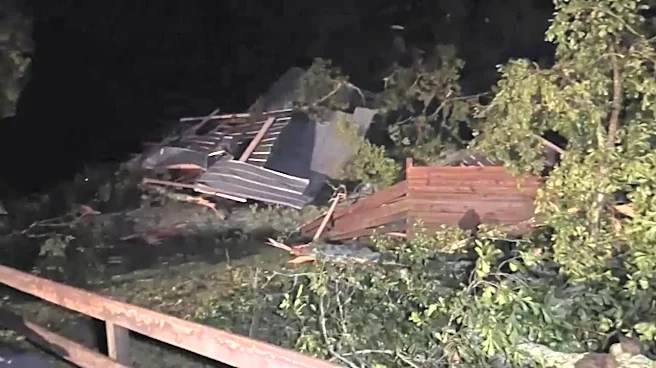
Residents in Kula, Hawaii, are facing significant storm damage following a Kona Low storm that transformed a local stream into a destructive river. Brad Sultzer and his wife Donna have reported nearly $100,000 in damages to their property on Polipoli
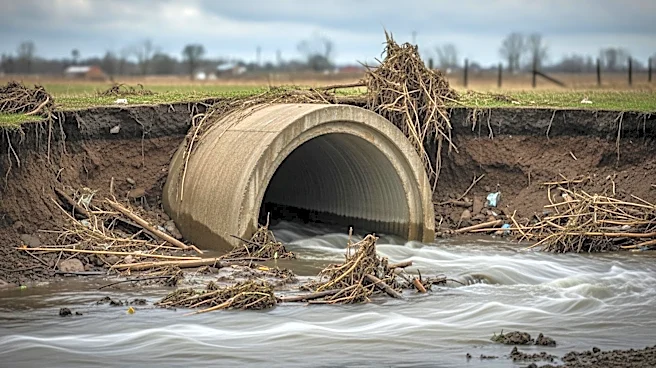
Road. The storm caused a stream to overflow, creating a waterfall effect that carried large boulders and debris down the mountain, severely damaging their orchards, beehives, and goat barn structures. Sultzer attributes the extensive damage to an undersized culvert that failed to manage the water flow, leading to the flooding of their property and others in the neighborhood. Despite previous warnings and requests for intervention from Maui County, no preventive measures were taken, leaving residents to deal with the aftermath.
Why It's Important?
The situation in Kula highlights the critical need for adequate infrastructure to manage natural water flows, especially in areas prone to severe weather events. The failure of the culvert to handle the stormwater not only caused significant property damage but also underscores the potential risks to public safety and the environment. This incident raises questions about the responsibility of local governments to maintain and upgrade infrastructure to prevent such disasters. The financial burden on residents, who are left to cover repair costs largely out of pocket, also points to gaps in insurance coverage for natural disasters. The broader implications include the need for policy changes to ensure better preparedness and response to extreme weather conditions.
What's Next?
Residents like Brad Sultzer are advocating for immediate and long-term solutions to prevent future incidents. This includes enlarging the culvert to accommodate larger volumes of water and implementing other flood mitigation measures. The community is also seeking accountability from local authorities, urging them to prioritize infrastructure improvements. The county's response and any subsequent actions will be closely watched by residents who are concerned about the potential for recurring damage. The situation may prompt broader discussions on infrastructure funding and disaster preparedness in Hawaii.