



What's Happening?
The United States and Israel are reportedly coordinating plans for a potential military strike on Iran, focusing on neutralizing Iran's missile capabilities and air defenses. This comes amid ongoing tensions over Iran's nuclear program and its regional
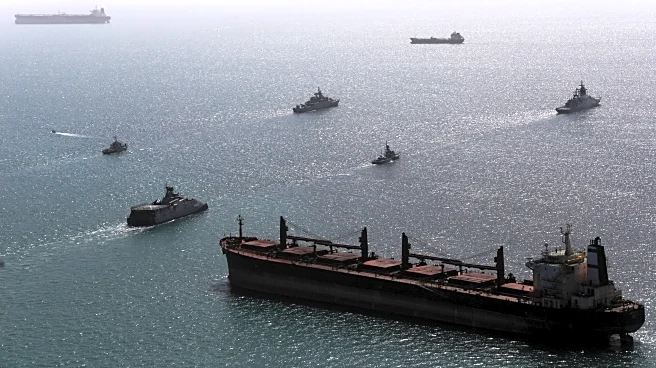
influence through proxies like Hezbollah and the Houthis. The U.S. aims to pressure Iran into negotiations by demonstrating military readiness, while Israel seeks to eliminate missile threats. The strategic plan involves disabling Iran's air defense systems to ensure air superiority, targeting ballistic missile arsenals, and dismantling Iran's drone capabilities. The collaboration between the U.S. and Israel includes reviewing intelligence and mapping potential targets, with a focus on Iran's Islamic Revolutionary Guard Corps (IRGC) and its naval capabilities in the Strait of Hormuz.
Why It's Important?
The potential military action underscores the high stakes in the Middle East, where Iran's missile capabilities pose a significant threat to regional stability and U.S. interests. A successful strike could weaken Iran's military infrastructure, potentially destabilizing the regime and affecting its ability to project power through proxies. For the U.S., this move could reinforce its commitment to regional allies and deter further Iranian aggression. However, the risks include possible retaliation from Iran, which could disrupt global oil supplies through the Strait of Hormuz, a critical shipping lane. The situation also highlights the complex geopolitical dynamics involving other powers like Russia and China, which have been involved in supporting Iran's defense capabilities.
What's Next?
If the U.S. and Israel proceed with a strike, the immediate focus will be on managing the aftermath, including potential Iranian retaliation. This could involve increased military readiness in the region and diplomatic efforts to mitigate escalation. The international community, particularly countries with vested interests in Middle Eastern stability, will likely respond with calls for restraint and dialogue. The U.S. may also face domestic and international scrutiny over the decision to engage militarily, especially if civilian casualties or significant regional destabilization occur. The outcome of such a strike could influence future U.S. foreign policy and its approach to Iran's nuclear ambitions.
Beyond the Headlines
The potential strike raises ethical and legal questions about preemptive military actions and their justification under international law. It also reflects the broader challenge of addressing nuclear proliferation and regional power dynamics without resorting to conflict. The situation could lead to long-term shifts in alliances and power structures in the Middle East, affecting global geopolitical stability. Additionally, the potential for domestic unrest in Iran, if the regime is weakened, could have significant implications for human rights and governance in the region.