
What's Happening?
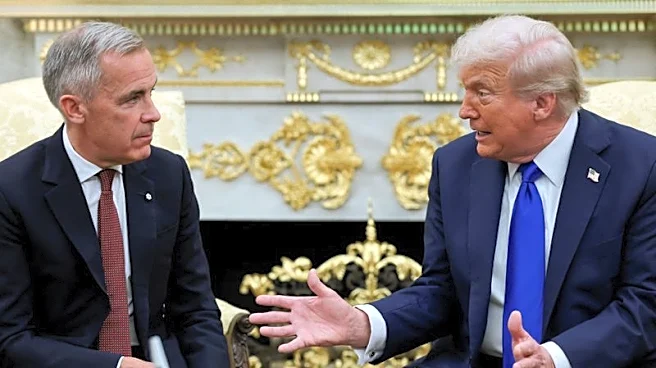
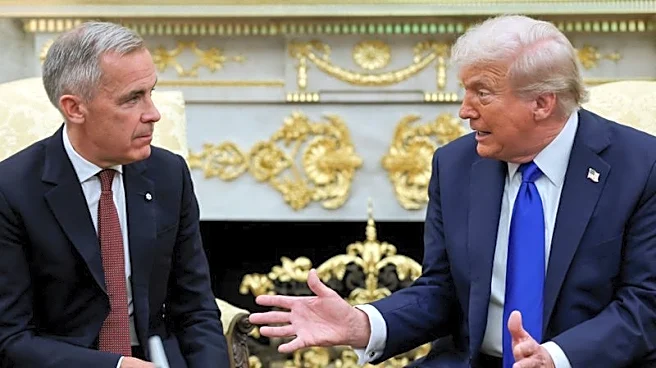
U.S. Vice-President JD Vance recently commented on the latest trade deal with Canada during a fundraising event in Southampton, N.Y. According to audio from the private function, Vance stated that Canadian Prime Minister Mark Carney attempted to 'out-tough'
President Trump during trade negotiations. Vance acknowledged that he gets along well with Carney, describing him as a 'very sweet guy,' but highlighted Carney's assertive stance in dealing with President Trump. These remarks followed a last-minute agreement announced by President Trump to temporarily delay new tariffs on various Canadian products for three days. This reprieve came after a phone call between President Trump and Prime Minister Carney, concluding weeks of intense bilateral negotiations. President Trump later characterized the deal as 'good for everybody' and noted a 'very nice relationship with leadership right now.'
Why It's Important?
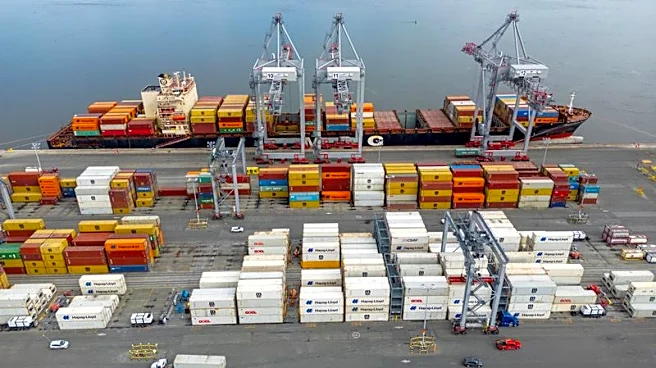
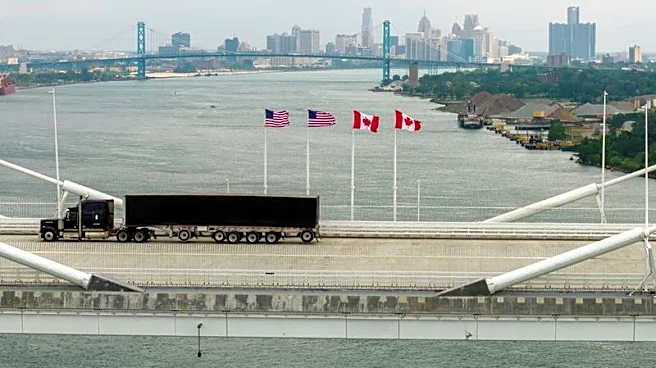
Vice-President Vance's comments offer insight into the U.S. administration's perspective on trade negotiations with Canada and the dynamics between the two leaders. His remarks underscore the often-contentious nature of international trade discussions, particularly when involving high-stakes economic interests. For U.S. industries, especially those affected by tariffs such as steel, aluminum, and automobiles, the temporary delay and potential reduction of tariffs are significant. The deal's implications extend to U.S. farmers, as President Trump claimed the agreement would eliminate tariffs on American agricultural products. This situation highlights the direct impact of political rhetoric and negotiation strategies on economic sectors and trade relationships. The ongoing trade discussions between the U.S. and Canada are crucial for maintaining economic stability and cooperation between two of the world's largest trading partners, affecting supply chains, consumer prices, and employment in both nations.
What's Next?
The immediate next steps involve the full implementation and clarification of the trade deal's specifics. While President Trump announced a temporary delay in tariffs and mentioned a 'good deal,' the exact details of Canada's concessions beyond returning American booze to liquor store shelves remain unclear. Further announcements are expected regarding the reduction of sectoral tariffs on Canadian steel, aluminum, and automobiles, and the elimination of tariffs on American farmers. Both U.S. and Canadian officials will likely continue to engage in discussions to solidify the terms and ensure smooth execution of the agreement. Stakeholders, including businesses, industry associations, and agricultural groups in both countries, will closely monitor these developments for their impact on market access, pricing, and overall economic stability. The long-term relationship between the U.S. and Canada, particularly concerning trade, will be shaped by the success and perceived fairness of this agreement.
Beyond the Headlines
Vice-President Vance's characterization of Prime Minister Carney's approach as trying to 'out-tough' President Trump reveals a deeper narrative about leadership styles and national pride in international negotiations. This dynamic underscores the blend of personal relationships and national interests that often define diplomatic efforts. The temporary nature of the tariff delay also highlights the fragility of trade agreements and the constant need for renegotiation and compromise. Ethically, it raises questions about the use of tariffs as a bargaining chip and their potential to disrupt established economic relationships. Culturally, such statements can influence public perception of foreign leaders and national resolve. The broader implication is that even among close allies, economic competition and nationalistic sentiments can lead to tense standoffs, requiring careful diplomacy to navigate. This event serves as a reminder of the complex interplay between politics, economics, and personal leadership in shaping international relations.