





What's Happening?
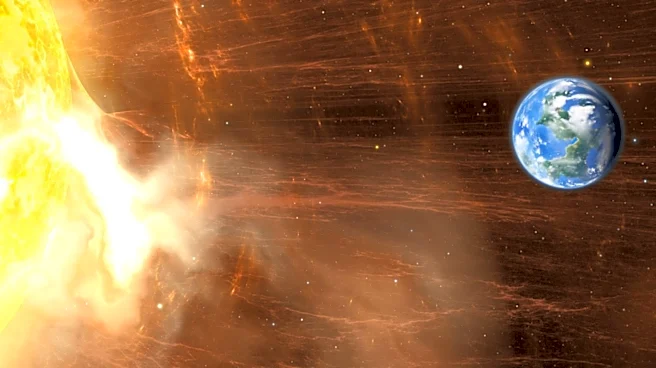
New research suggests that Earth may be twice as vulnerable to extreme solar storms as previously thought. The study, published in Nature, indicates that the planet's geomagnetic response to solar storms could be more severe than traditional models predict.
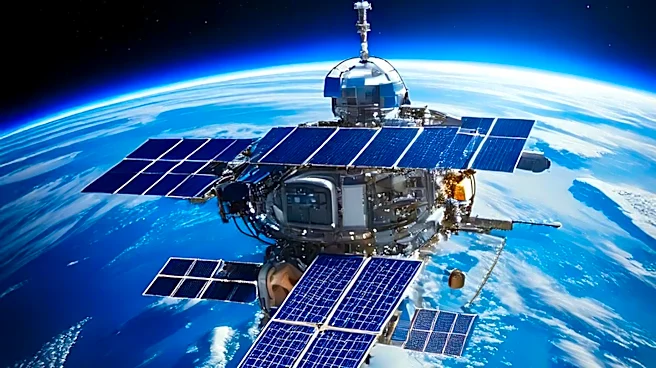
This finding challenges the assumption that Earth's magnetic field has a built-in limit on its response to solar wind. The research highlights the potential for significant disruptions to satellites, GPS, radio communications, and power grids during extreme solar events. The study was led by Dr. Nithin Sivadas of NASA's Goddard Space Flight Center and Dr. Maria Walach of Lancaster University.
Why It's Important?
The increased vulnerability to solar storms poses a significant risk to modern technology and infrastructure, which are heavily reliant on satellites and communication systems. Disruptions caused by solar storms can lead to widespread outages and impact critical services, including aviation and power networks. Understanding the true extent of Earth's vulnerability is crucial for developing more accurate models and preparing for potential extreme events. The findings underscore the need for enhanced monitoring and mitigation strategies to protect against the adverse effects of space weather on technological systems.
What's Next?
The study calls for a reevaluation of existing models and theories regarding Earth's response to solar storms. Researchers emphasize the importance of accounting for the potential severity of extreme events in future modeling efforts. As scientists continue to study space weather, there is a need for improved data collection and analysis to better predict and mitigate the impacts of solar storms. The findings also highlight the importance of international collaboration in monitoring space weather and developing strategies to safeguard critical infrastructure.