
What's Happening?
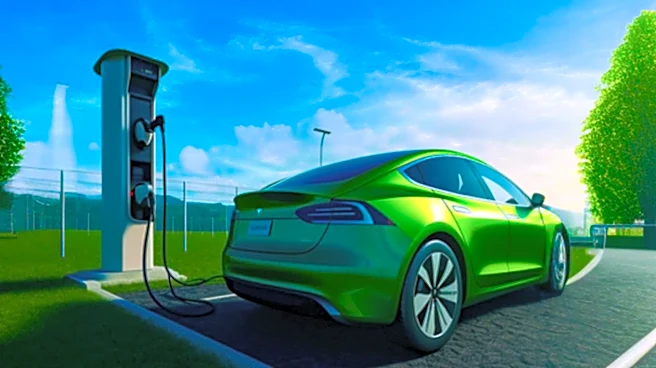
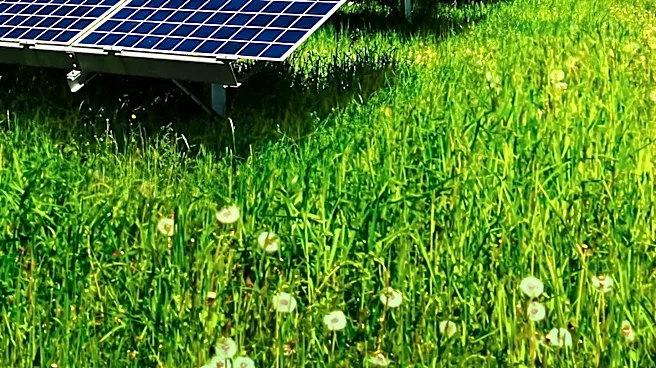
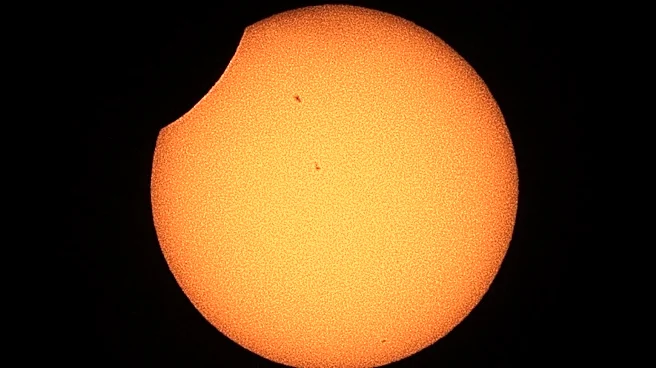
Europe is set to experience a solar eclipse on August 12, which will test the continent's expanded battery storage capacity. Over the past year, Europe's battery fleet has doubled to 29 gigawatts, a significant
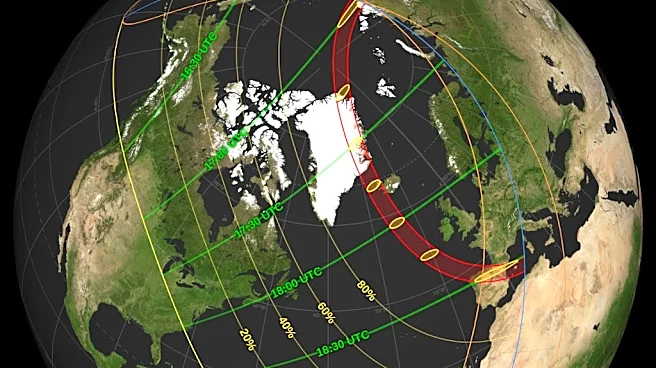
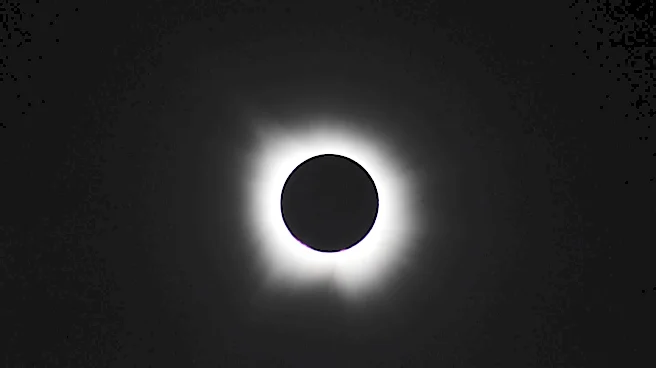
increase aimed at supporting the grid during periods of reduced solar generation. The eclipse will cross Greenland, Iceland, and northern Spain, with a partial eclipse affecting most of Europe. This event follows a similar test in Texas in 2024, where natural gas plants compensated for the loss of solar power. Europe's approach relies on renewable energy and battery storage, marking a shift from traditional fossil fuel-based solutions.
Why It's Important?
The upcoming solar eclipse serves as a critical test for Europe's renewable energy infrastructure, particularly its reliance on battery storage to maintain grid stability. The successful management of this event could demonstrate the viability of large-scale battery storage as a replacement for fossil fuel-based power generation during periods of low solar output. This has implications for energy policy, as it could accelerate the transition to renewable energy sources and reduce dependence on natural gas and other fossil fuels. The outcome of this test will be closely watched by other regions, including the United States, as they seek to enhance their own renewable energy capabilities.
What's Next?
Following the eclipse, European grid operators will analyze the performance of the battery storage systems and identify areas for improvement. This analysis will inform future investments in renewable energy infrastructure and guide policy decisions related to energy storage and grid management. The success of this test could lead to increased confidence in battery storage solutions, encouraging further expansion and innovation in the sector. Additionally, other regions may look to Europe's experience as a model for integrating renewable energy and storage technologies into their own grids.