



What's Happening?
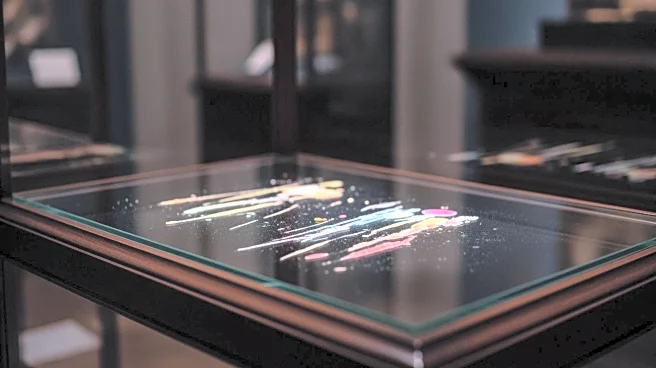
Four protesters were arrested after they splattered food on the display case of the Imperial State Crown at the Tower of London. The incident involved members of a group called Take Back Power, who smeared apple crumble and poured yellow custard on the case.
The crown, which contains 2,868 diamonds, 17 sapphires, 11 emeralds, four rubies, and 269 pearls, was crafted for the coronation of King Charles III's grandfather, George VI, in 1937. Despite the protest, the jewels remained unharmed, according to Historic Royal Palaces. The Crown Jewels display was temporarily closed following the incident. The protest was part of a civil disobedience campaign advocating for a permanent citizens' assembly and increased taxation on extreme wealth.
Why It's Important?
This protest highlights ongoing tensions surrounding wealth inequality and the use of public demonstrations to draw attention to political causes. The act of targeting a high-profile symbol like the Crown Jewels underscores the protesters' message about wealth distribution and democracy. Such incidents can influence public discourse and potentially lead to policy discussions about wealth taxation and citizen representation. The protest also raises questions about security measures at cultural and historical sites, prompting potential reviews of how these sites are protected against similar acts of civil disobedience.
What's Next?
The arrest of the protesters may lead to legal proceedings, which could further amplify their message and bring more attention to their cause. Authorities might consider increasing security measures at the Tower of London and similar sites to prevent future incidents. The protest could also spark broader discussions among policymakers and the public about wealth inequality and the role of civil disobedience in advocating for change. The group's call for a citizens' assembly and wealth taxation might gain traction, influencing political agendas and public policy debates.
Beyond the Headlines
The protest at the Tower of London is part of a larger trend of activists targeting cultural and historical artifacts to draw attention to social and political issues. This method of protest raises ethical questions about the balance between freedom of expression and the preservation of cultural heritage. It also highlights the evolving strategies of civil disobedience groups in the digital age, where visual stunts can quickly gain media attention and influence public opinion. The incident may prompt cultural institutions to reassess their engagement with political and social movements.