
What's Happening?
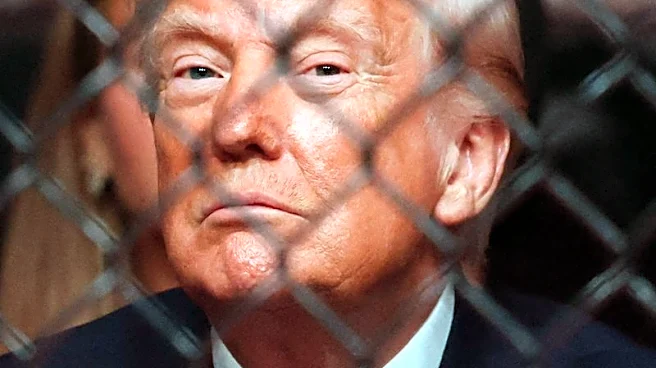
The U.S. Navy has initiated a blockade of the Strait of Hormuz, a critical maritime chokepoint, following orders from President Trump. This action comes after peace talks between the U.S. and Iran failed,
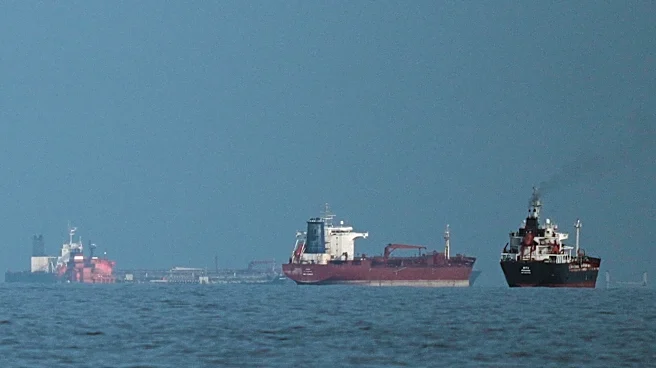
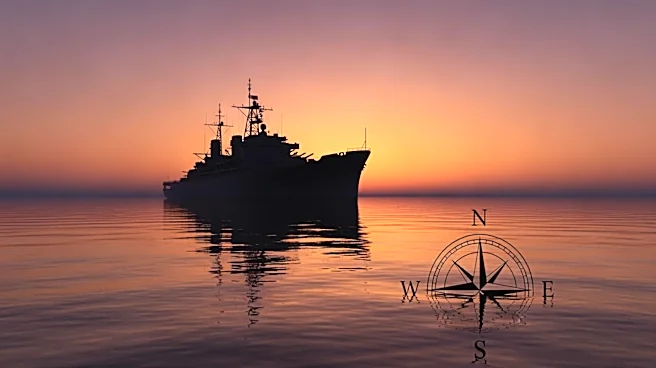
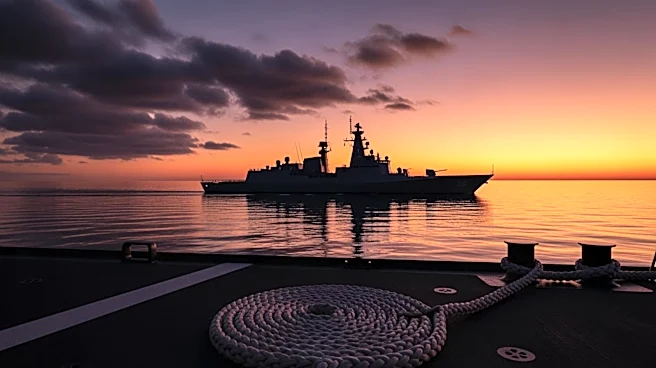
escalating tensions in the region. The blockade targets ships entering or leaving Iranian ports, with six merchant vessels already complying with U.S. directives to turn back. The blockade is enforced by over 10,000 U.S. military personnel, numerous warships, and aircraft. While humanitarian shipments are allowed, they are subject to inspection. The blockade aims to pressure Iran amid ongoing conflicts and has already impacted global oil prices, which surged above $100 per barrel.
Why It's Important?
The blockade of the Strait of Hormuz is a significant military maneuver that underscores the heightened tensions between the U.S. and Iran. The strait is a vital passage for global oil and gas supplies, and its closure could have severe economic repercussions worldwide. The U.S. action is likely to provoke a response from Iran, potentially leading to further military confrontations. The situation also places additional strain on international relations, particularly with countries reliant on Middle Eastern oil. The blockade reflects the broader geopolitical struggle in the region and could influence future U.S. foreign policy and military strategy.
What's Next?
The blockade is expected to continue as the U.S. seeks to exert pressure on Iran. The international community, including major oil-importing nations, will be closely monitoring the situation. Potential diplomatic efforts may arise to de-escalate tensions and reopen negotiations. However, the risk of military escalation remains high, with Iran likely to respond to the blockade. The situation could also impact global oil markets, with potential price fluctuations affecting economies worldwide. The U.S. may face diplomatic challenges from allies and partners concerned about the blockade's implications for regional stability.