



What's Happening?
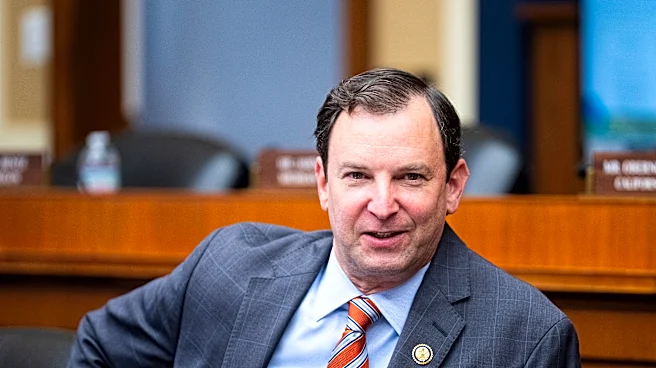
The U.S. House of Representatives has passed the Disaster Loan Outreach Consistency Act (H.R. 10355), a bipartisan bill co-led by CNMI Delegate Kimberlyn King-Hinds and Rep. Analilia Mejia, D-N.J. This legislation aims to mandate the Small Business Administration
(SBA) to provide consistent and accurate information to disaster survivors and small businesses seeking federal assistance. The bill's passage follows a May 2026 Government Accountability Office (GAO) report that highlighted inconsistencies in outreach materials across SBA disaster field offices. The GAO report found that information provided to applicants varied significantly, particularly regarding eligibility for Federal Emergency Management Agency (FEMA) assistance without first applying for an SBA disaster loan. Delegate King-Hinds emphasized that disaster survivors should receive uniform information regardless of which SBA field office handles their case. The bill now proceeds to the Senate for further consideration.
Why It's Important?
This legislation is crucial for ensuring equitable access to federal disaster assistance across the United States. Inconsistent information from different SBA field offices can create confusion, delays, and potentially prevent eligible disaster survivors and small businesses from receiving timely aid. For regions frequently impacted by natural disasters, such as the Northern Mariana Islands, where two super typhoons occurred earlier this year, clear and consistent communication is vital for recovery efforts. The bill addresses a systemic issue identified by the GAO, aiming to eliminate discrepancies that can disadvantage certain applicants. By standardizing outreach materials and verification procedures, the bill seeks to enhance government accountability and improve the efficiency of disaster relief programs, directly impacting the ability of communities to rebuild and recover.
What's Next?
The Disaster Loan Outreach Consistency Act (H.R. 10355) will now move to the Senate for consideration. If enacted, the SBA will be required to establish standardized outreach templates, implement verification procedures for public information, and conduct annual reviews to ensure consistency across its disaster field operations centers. The agency would also need to update its procedures following significant policy changes and notify congressional small business committees of these revisions. The bipartisan support the bill received in the House suggests potential for passage in the Senate, which would then lead to the SBA implementing these new requirements. This would involve a comprehensive overhaul of their communication protocols for disaster loans, impacting how information is disseminated to affected populations nationwide.
Beyond the Headlines
The underlying issue addressed by this bill extends beyond mere administrative inconsistency; it touches upon the broader principle of governmental fairness and accessibility. Disparities in information can exacerbate inequalities, particularly for vulnerable populations who may lack the resources to navigate complex bureaucratic systems. By mandating standardization, the legislation aims to create a more transparent and equitable process for all disaster survivors, reinforcing public trust in federal aid programs. This move could also set a precedent for other federal agencies to review and standardize their public communication strategies, ensuring that critical information is uniformly accessible and understandable across different regions and demographics, thereby strengthening overall government responsiveness during crises.