








What's Happening?
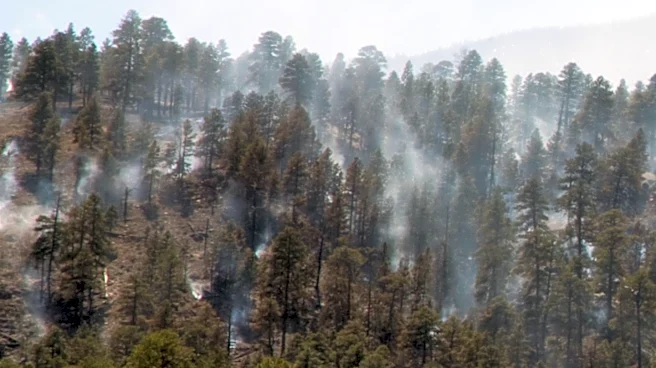
Officials have commenced prescribed pile burn operations across more than 500 acres within the Dixie National Forest this week. The U.S. Forest Service confirmed that these operations are scheduled for various areas, including the Pine Valley, Cedar City,
and Escalante Ranger Districts, and may extend through the weekend. The decision to proceed with these burns is based on currently favorable conditions and fuel moisture levels. Specifically, in the Pine Valley Ranger District, 488 acres are slated for burning in the Grass Valley Region, located five miles north of Pine Valley. The Cedar City Ranger District has over 500 acres planned for prescribed burns, with 300 acres situated 0.25 miles west of Assay Knoll. Additionally, 200 acres are designated for burning in Henry Knolls North, 0.25 miles north of the Mammoth Creek Campground. Smaller operations are also planned for 10 acres in the Clear Creek area west of Panguitch Lake and another 10 acres in Lower Bunker Creek, southwest of Panguitch Lake. These controlled burns are a strategic land management tool employed to reduce hazardous fuel loads and promote forest health.
Why It's Important?
These prescribed burns are crucial for mitigating the risk of large, uncontrolled wildfires, which pose significant threats to both natural ecosystems and human communities. By intentionally burning accumulated dead vegetation and undergrowth, the U.S. Forest Service aims to reduce the intensity and spread of potential future wildfires, thereby protecting homes, infrastructure, and natural resources. This proactive approach helps maintain forest health by promoting new growth, enhancing biodiversity, and restoring natural fire regimes that many ecosystems depend on. The controlled application of fire can also improve wildlife habitats by creating diverse vegetation structures and increasing nutrient availability in the soil. For local communities, these operations can reduce smoke impacts compared to uncontrolled wildfires and provide a safer environment by creating defensible spaces around populated areas. The successful execution of these burns is vital for long-term forest resilience and public safety in the region.
What's Next?
The prescribed burn operations are expected to continue throughout the week and potentially into the weekend, contingent on weather conditions and fuel moisture levels remaining favorable. Forest Service officials will continuously monitor these factors to ensure the safety and effectiveness of the burns. Following the completion of the burning, crews will monitor the areas to ensure that all fires are fully extinguished and to prevent any reignition. In the longer term, the treated areas will be observed for ecological recovery and the effectiveness of the fuel reduction. This may involve assessing vegetation regrowth, wildlife response, and overall forest health improvements. The data collected from these operations will inform future land management decisions and prescribed burn plans, contributing to ongoing efforts to manage wildfire risk and maintain healthy forest ecosystems in the Dixie National Forest.
Beyond the Headlines
The practice of prescribed burning reflects a broader shift in wildfire management strategies, moving from a purely suppressive approach to one that integrates fire as a natural and necessary ecological process. This approach acknowledges that decades of fire suppression have led to an unnatural accumulation of fuels, making forests more susceptible to catastrophic wildfires. By reintroducing controlled fire, land managers are attempting to restore ecological balance and reduce the severity of future fire events. However, these operations also involve careful planning and public communication, as smoke impacts can be a concern for nearby communities. The success of such programs relies on public understanding and acceptance of fire as a management tool, highlighting the ongoing challenge of balancing ecological needs with public health and safety considerations. This strategy is a critical component of adapting to changing climate patterns that are contributing to more frequent and intense wildfire seasons across the Western U.S.