




What's Happening?
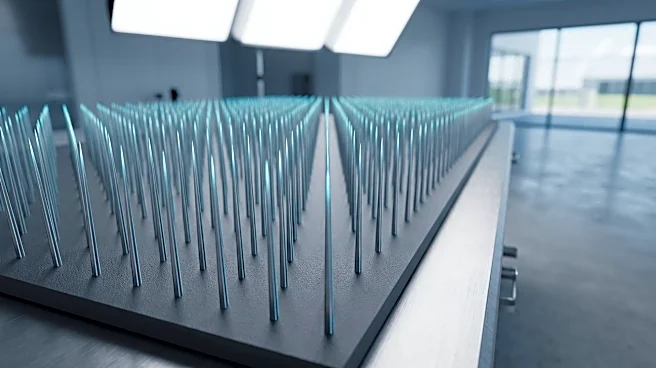
Researchers led by Professor Shi Peng at City University of Hong Kong (CityUHK) have developed a new spatial omics method called Spectrum-FISH. This technology allows for sequencing-free and amplification-free spatial tissue analysis using vertically
aligned nanoprobes in a 'touch-and-go' molecular fishing strategy. Unlike existing spatial omics technologies that often require extensive tissue pretreatment, Spectrum-FISH can be applied directly to freshly prepared tissue samples. The method preserves spatial information through a registration strategy, enabling researchers to map molecular signals back to tissue structures and individual cells. Experiments involving developing mouse neural tubes, olfactory bulbs, and fresh human colorectal biopsy specimens have demonstrated its capability to profile messenger RNAs (mRNAs), microRNAs (miRNAs), and RNA methylation. The findings were published in Nature Biomedical Engineering, with a related comment article on the clinical translation of spatial omics co-authored by Shi in Nature Reviews Bioengineering.
Why It's Important?
The development of Spectrum-FISH represents a significant advancement in spatial biology, particularly for its potential to bridge the gap between complex research technologies and routine clinical use. Current spatial omics methods are often demanding, requiring expensive instruments, sequencing, complicated tissue preparation, lengthy workflows, and substantial computational resources. These requirements pose major obstacles in pathology laboratories where time-sensitive biopsies, clinical practicality, and broad patient access are critical. Spectrum-FISH's compatibility with fresh tissues and its sequencing-free design offer advantages in affordability and scalability, making advanced spatial analysis more accessible. This could lead to a deeper understanding of diseases like cancer, neurobiology, and immunology by providing crucial spatial context about molecular organization within tissues, which is currently limited by the practical constraints of existing technologies.
What's Next?
The research team anticipates that Spectrum-FISH will pave the way for more widespread clinical application of spatial omics technologies. By simplifying workflows and reducing costs while maintaining spatial insight, the method aims to make advanced tissue mapping practical and accessible for diagnostic and research purposes. The ability to profile various RNA types without large-scale sequencing infrastructure suggests a potential pathway toward spatial multi-omics that are less dependent on current resource-intensive approaches. Future efforts will likely focus on further validating the technology in diverse clinical settings and exploring its full potential for understanding disease progression and guiding treatment strategies, ultimately translating these detailed molecular maps into meaningful clinical actions.
Beyond the Headlines
The innovation behind Spectrum-FISH extends beyond mere technological advancement; it addresses fundamental challenges in making cutting-edge biomedical research applicable in real-world clinical scenarios. The emphasis on practicality and accessibility highlights a growing trend in scientific development to democratize advanced diagnostic tools. By reducing the reliance on expensive sequencing and complex tissue preparation, this technology could foster more equitable access to sophisticated molecular diagnostics, particularly in regions or institutions with limited resources. This shift could also accelerate the pace of discovery in fields like personalized medicine, where understanding the precise spatial organization of molecules within a patient's tissue is crucial for tailoring effective therapies. The ethical implications of more accessible and detailed biological insights will also become increasingly relevant as these technologies move closer to routine clinical integration.