








What's Happening?
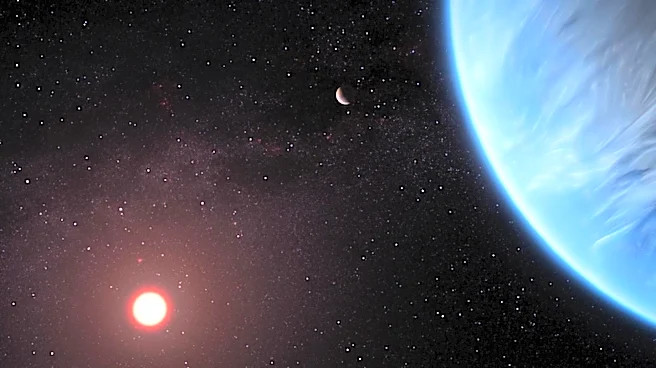
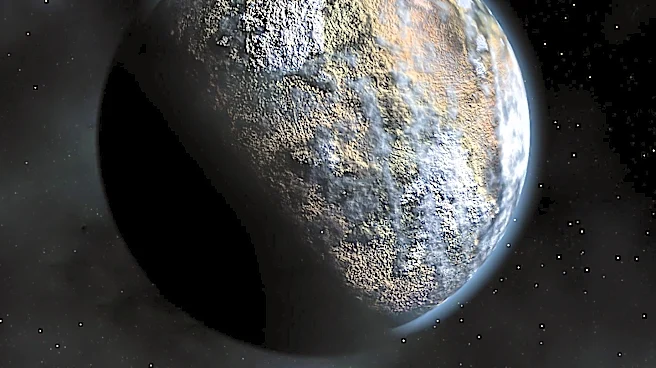
Astronomers have discovered an Earth-like exoplanet, GJ 3378b, located approximately 25 light-years away in the constellation Camelopardalis. This rocky planet orbits within the habitable zone of a nearby red dwarf star, where conditions may allow for
liquid water on its surface. Initial observations using the SPIRou instrument suggested the planet was a mini-Neptune, but further analysis revealed it to be a super-Earth with a mass of 2.3 Earth masses. The planet's proximity to its star and its position in the habitable zone make it a prime candidate for future studies on potential biosignatures.
Why It's Important?
The discovery of GJ 3378b is significant as it adds to the growing list of potentially habitable exoplanets, offering new opportunities to study conditions that may support life beyond Earth. The planet's location in the habitable zone and its Earth-like characteristics make it an ideal target for future missions aimed at detecting biosignatures. Understanding the atmospheric composition and potential habitability of such exoplanets is crucial for addressing the fundamental question of whether life exists elsewhere in the universe.
What's Next?
Further observations and studies are needed to confirm the presence of an atmosphere on GJ 3378b and to assess its potential for supporting life. The planet does not transit its host star, making atmospheric characterization challenging with current technology. Future missions, such as NASA's Habitable Worlds Observatory, may provide the necessary tools to study this exoplanet in greater detail. Continued research on GJ 3378b and similar exoplanets will advance our understanding of planetary habitability and the search for extraterrestrial life.