








What's Happening?
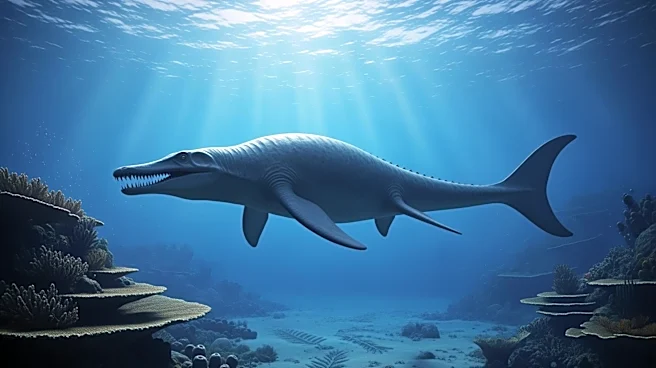
Scientists have identified Tylosaurus rex as a distinct species of marine reptile that lived during the Cretaceous Period, approximately 80 million years ago. This discovery was made after a comprehensive examination of previously discovered fossils,
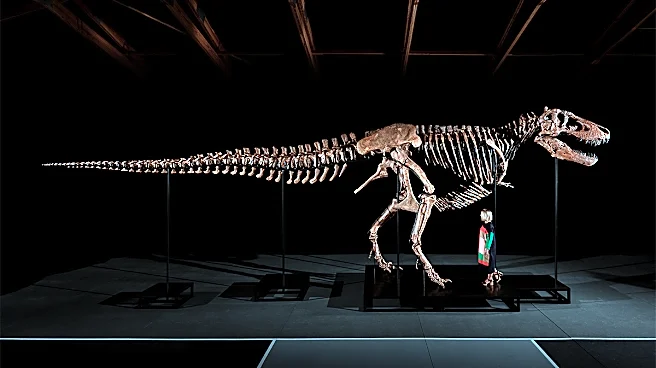
which revealed unique anatomical features such as fine serrations on the teeth and strong jaw musculature. Tylosaurus rex, a member of the mosasaur family, was a formidable predator in the Western Interior Seaway of North America, rivaling the land-dwelling Tyrannosaurus rex in size and ferocity. The largest known specimen, nicknamed Bunker, measures about 43 feet in length and is housed at the University of Kansas Biodiversity Institute and Natural History Museum.
Why It's Important?
The identification of Tylosaurus rex as a distinct species enhances our understanding of marine ecosystems during the Cretaceous Period. This discovery highlights the diversity and adaptability of mosasaurs, which evolved from land-dwelling lizards to become apex predators in marine environments. The study of Tylosaurus rex provides insights into the evolutionary history of marine reptiles and their ecological roles. Additionally, it underscores the importance of fossil re-examination in uncovering new species and refining our knowledge of prehistoric life.