



What's Happening?
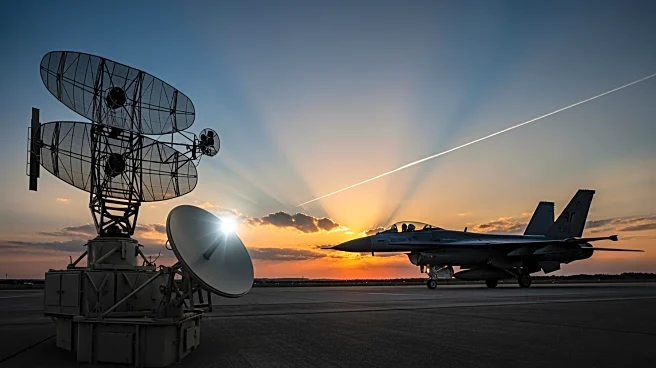
NATO fighter jets were mobilized in Poland as a precautionary measure following Russia's extensive overnight drone and missile strikes on Ukraine. The Armed Forces Operational Command in Warsaw reported that air defense systems and radar reconnaissance
were put on high alert. This response was part of a preventive strategy to secure airspace, particularly in regions adjacent to the conflict zones. The alert lasted under four hours, with no violations of Polish airspace reported. The Spanish, Czech, German, and Dutch forces participated in the response. Ukraine's air force reported that Russia launched 653 drones and 51 missiles, including 17 ballistic missiles, with 585 drones and 30 missiles intercepted. The attack affected 29 locations, marking one of the largest bombardments since the war began.
Why It's Important?
The escalation of military activities by Russia underscores the ongoing volatility in Eastern Europe, with significant implications for regional security and international relations. NATO's involvement highlights the alliance's commitment to protecting its member states and maintaining stability in the region. The attacks on Ukraine's infrastructure, including energy facilities, have severe humanitarian impacts, disrupting power and heating for thousands. This situation stresses the need for continued international support for Ukraine and raises concerns about potential nuclear risks, as evidenced by the temporary power loss at the Zaporizhzhia nuclear plant. The incident also emphasizes the importance of diplomatic efforts to de-escalate tensions and prevent further conflict.
What's Next?
In response to the attacks, Ukrainian Prime Minister Yulia Svyrydenko convened an emergency meeting with key ministers and energy company leaders to coordinate recovery efforts. The international community, particularly NATO and the European Union, may face increased pressure to enhance support for Ukraine, both militarily and economically. The situation could lead to further sanctions against Russia and increased military readiness among NATO countries. Additionally, the potential for diplomatic negotiations remains critical, as stakeholders seek to prevent further escalation and address the humanitarian crisis.
Beyond the Headlines
The ongoing conflict in Ukraine highlights broader geopolitical tensions between Russia and Western nations. The attacks on civilian infrastructure, particularly energy systems, are part of a strategy to weaken Ukraine's resilience and morale. This approach raises ethical concerns about the targeting of non-military assets and the resulting civilian suffering. The situation also reflects the complex interplay of military strategy, international diplomacy, and humanitarian considerations, with long-term implications for global security and the international order.