
What's Happening?
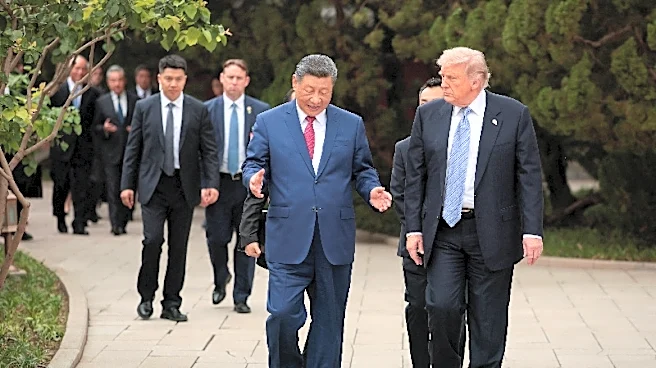
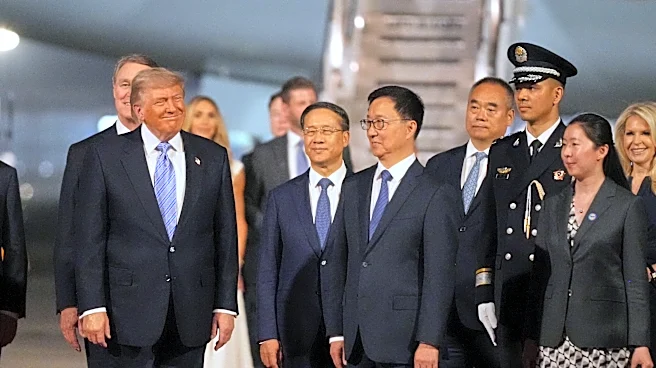
President Trump is currently considering whether to proceed with a $14 billion arms sale to Taiwan, following discussions with Chinese President Xi Jinping. The decision comes amidst heightened tensions
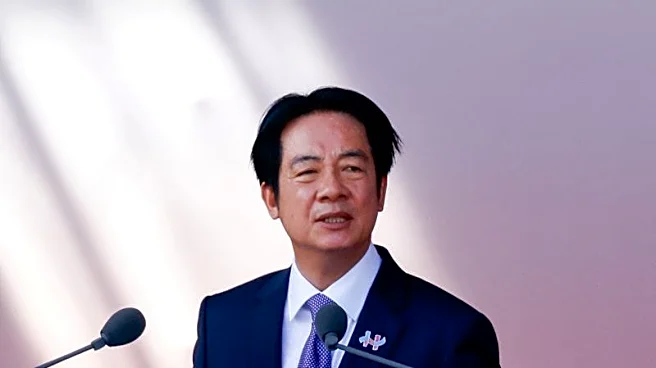
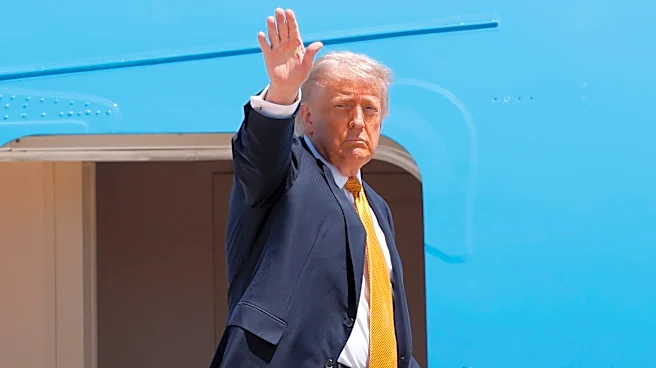
between the U.S. and China over Taiwan, a self-governing island that China claims as its own. During talks, Xi emphasized that Taiwan is the most critical issue in China-U.S. relations, warning that mishandling could lead to conflicts. Trump, while traveling back to Washington, stated that he has not yet made a decision on the arms sale and expressed a desire for both Beijing and Taipei to 'cool down' their rhetoric. The U.S. has historically been a significant arms supplier to Taiwan, operating under the 'One China' policy, which acknowledges China's claims over Taiwan without taking a definitive stance.
Why It's Important?
The potential arms sale to Taiwan is significant as it could further strain U.S.-China relations, which are already tense due to various geopolitical issues. The sale represents a critical point in the U.S.'s balancing act between supporting Taiwan's defense capabilities and maintaining diplomatic relations with China. For Taiwan, the arms deal is crucial for its defense against potential aggression from China. For the U.S., the decision could impact its strategic interests in the Asia-Pacific region and its broader foreign policy objectives. The outcome of this decision could influence future U.S. arms sales and its diplomatic stance in the region.
What's Next?
President Trump is expected to make a decision on the arms sale soon, which will then need to be sent to Congress for approval. The decision will likely prompt reactions from both Beijing and Taipei, with potential diplomatic repercussions. If the sale proceeds, it could lead to increased military tensions in the Taiwan Strait and impact U.S.-China relations. Conversely, a decision to halt the sale might be seen as a concession to China, affecting U.S. credibility with Taiwan and other regional allies.