



What's Happening?
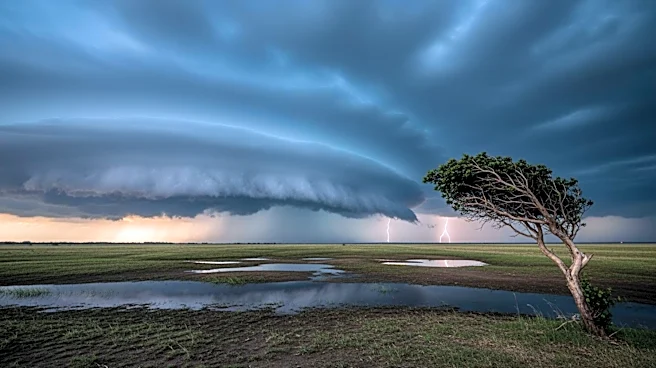
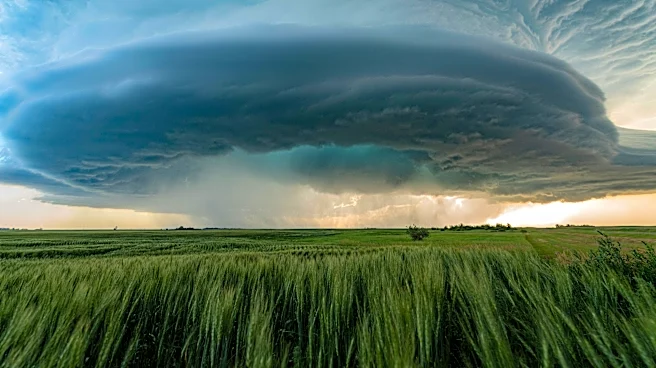
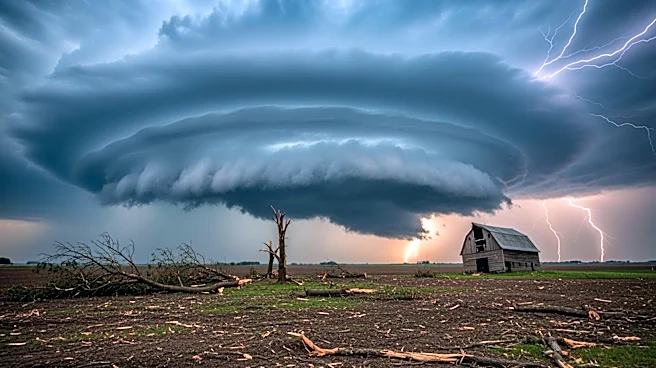
A series of severe storms, including numerous tornadoes, swept through the U.S. Midwest, causing significant damage to homes and infrastructure across several states. The National Weather Service (NWS) had issued warnings for severe thunderstorms from
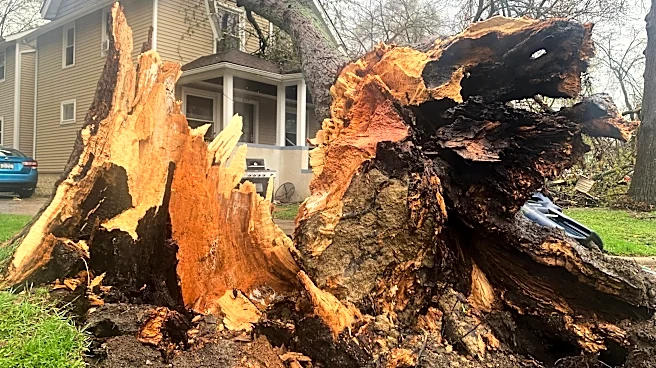
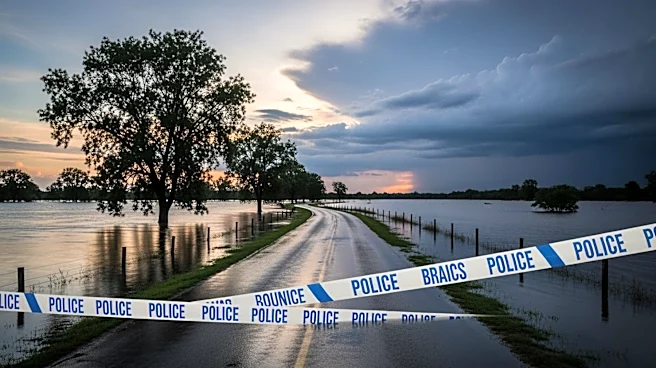
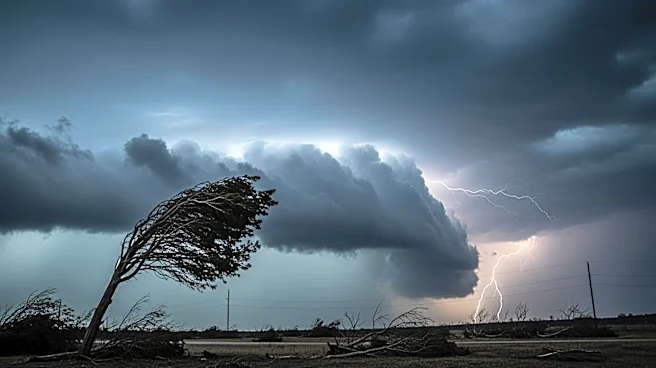
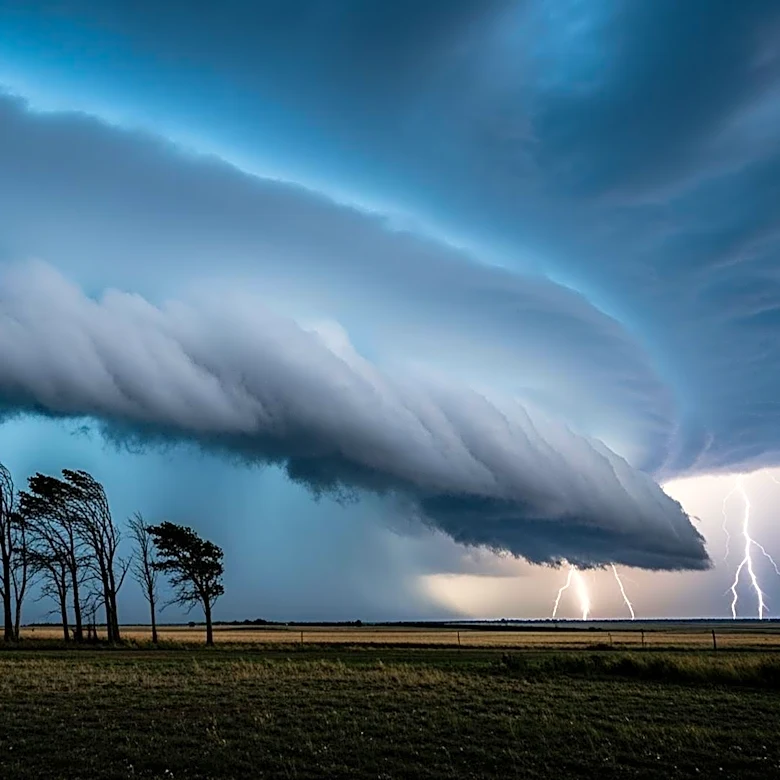
Oklahoma to the Great Lakes, highlighting the potential for hail, strong tornadoes, and severe winds. Reports indicate that nearly four dozen tornadoes have been recorded from Texas to the Great Lakes since Monday, with over 350 hail reports. In Minnesota, tornadoes caused widespread damage in Olmsted County, affecting about 30 homes in Marion and causing major damage to eight homes in Stewartville. In Wisconsin, Marathon County experienced significant damage, prompting a response from multiple law enforcement agencies. In Lena, Illinois, a likely tornado caused extensive damage to homes and businesses, leading officials to restrict access to the village. Belton, Missouri, also reported widespread damage and minor injuries. As of early Saturday, more than 87,000 homes and businesses were without power across Indiana, Illinois, Missouri, and Oklahoma.
Why It's Important?
The severe weather events highlight the vulnerability of infrastructure and communities in the Midwest to extreme weather conditions. The widespread damage and power outages underscore the need for robust emergency preparedness and response strategies. The storms have disrupted daily life for thousands, with significant economic implications due to property damage and the cost of recovery efforts. The situation also raises concerns about the increasing frequency and intensity of severe weather patterns, potentially linked to broader climate change trends. Communities affected by the storms face immediate challenges in terms of safety, shelter, and restoring essential services, while local governments and emergency services are tasked with coordinating recovery and support efforts.
What's Next?
Recovery efforts are underway in the affected areas, with local authorities focusing on ensuring the safety of residents and securing damaged structures. The NWS continues to provide updated forecasts and warnings as the severe weather pattern persists. Communities are likely to face ongoing challenges related to cleanup and rebuilding, with potential for further weather-related disruptions. The situation may prompt discussions on improving infrastructure resilience and emergency response capabilities to better handle future severe weather events.