

What's Happening?
Rhode Island's cities and towns allocated $931 million to police and fire protection in fiscal year 2024, accounting for approximately a quarter of municipal budgets, according to a report by the Rhode Island Public Expenditure Council (RIPEC). The state
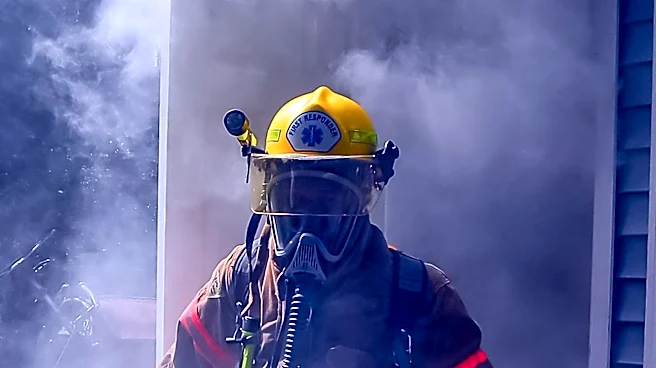
ranks first nationally in per capita fire spending, at 1.8 times the national average, and ninth in police spending. Despite this high expenditure, Rhode Island recorded the fourth-lowest violent crime rate and third-lowest property crime rate among states in 2024. Fires constituted only about 2% of fire department calls in 2023, with medical calls making up over 70%. RIPEC highlights staffing models, particularly the reliance on professional firefighters compared to other states' volunteer systems, and costly state mandates like the 2019 law requiring time-and-a-half for firefighters working over 42 hours a week, which counts paid leave as hours worked, as key drivers of these costs. Pensions also contribute significantly, consuming over a fifth of police spending and over a quarter of fire spending, with several local plans underfunded.
Why It's Important?
The high public safety spending in Rhode Island has significant implications for taxpayers and municipal budgets. With fire protection costs nearly double the national average per capita, and police spending also among the highest, property taxes are heavily impacted. This situation raises questions about the efficiency and allocation of resources, especially given the state's low crime rates and the fact that most fire department calls are for medical emergencies rather than fires. The current spending model, driven by staffing levels and state-mandated labor provisions, suggests a potential misalignment between resource deployment and actual community needs. Taxpayers are bearing the burden of these costs without clear evidence of their direct benefit in terms of public safety outcomes, prompting calls for greater transparency and accountability in how these funds are utilized. The issue also highlights the broader challenge of balancing public sector compensation and benefits with fiscal sustainability.
What's Next?
RIPEC has proposed several recommendations to address the high public safety costs. These include requiring every city and town to publish an annual public safety report in a standardized format, detailing calls by type, response times, staffing, overtime, injured-on-duty cases, and pension costs. Another recommendation is to match the response to the call, suggesting that communities explore dedicated medical units instead of deploying full engine companies for every medical emergency. The report also advocates for regional dispatch centers and shared services. Furthermore, RIPEC urges the General Assembly to cease passing labor mandates without accompanying fiscal notes, specifically recommending a review of the paid-leave provision in the 42-hour law for firefighters. These steps aim to provide greater transparency and potentially lead to more cost-effective public safety operations without necessarily reducing the number of personnel.
Beyond the Headlines
The debate over Rhode Island's public safety spending extends beyond mere financial figures, touching upon the fundamental structure of municipal services and labor relations. The reliance on professional firefighters, while ensuring a high level of service, contrasts with the volunteer models prevalent in many other states, raising questions about the optimal balance between professionalization and cost-efficiency. The significant portion of fire department calls dedicated to medical emergencies suggests a broader societal shift in the role of emergency services, potentially necessitating a re-evaluation of training, equipment, and departmental structures. Moreover, the influence of state-level labor mandates on local budgets highlights the tension between state legislative power and municipal fiscal autonomy. Addressing these issues requires a comprehensive approach that considers not only economic efficiency but also the evolving needs of communities and the well-being of public safety personnel.